VSAQ for Chapter 2 Understanding the Weather Class 7 Social Science NCERT
Important Questions1
Q1: What is weather?
Answer
Weather is the condition of the Earth's atmosphere at a specific time and place.
VSAQ
2
Q2: Which layer of the atmosphere is responsible for all weather changes?
Answer
The troposphere is the layer where all weather changes occur.
VSAQ
3
Q3: How thick is the troposphere at the poles?
Answer
The troposphere is about 6 kilometers thick at the poles.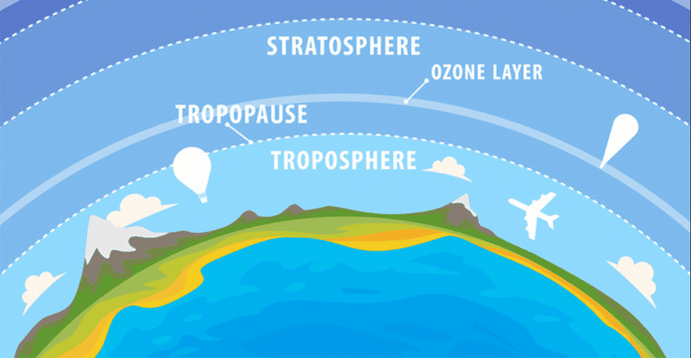
Troposphere
VSAQ
4
Q4: Why do people in different regions experience weather differently?
Answer
People feel weather differently based on their regional climate and adaptation.
VSAQ
5
Q5: What type of clothes do people wear in winter?
Answer
People wear warm clothes during winter to protect themselves from the cold.
VSAQ
6
Q6: How did people in earlier times predict rain using nature?
Answer
People observed signs like pine cones closing to predict rain.
VSAQ
7
Q7: Which instrument is used to measure temperature?
Answer
A thermometer is used to measure how hot or cold the air is.
VSAQ
8
Q8: What does a rain gauge measure?
Answer
A rain gauge measures the amount of rainfall in millimeters.
VSAQ
9
Q9: What does atmospheric pressure mean?
Answer
Atmospheric pressure is the weight of air pressing down on the Earth's surface.
VSAQ
10
Q10: Where is atmospheric pressure lower: mountains or sea coasts?
Answer
Atmospheric pressure is lower in mountains compared to sea coasts.
VSAQ
11
Q11: Which instrument is used to measure atmospheric pressure?
Answer
A barometer is used to measure atmospheric pressure in millibars.
VSAQ
12
Q12: What causes breathlessness at high altitudes?
Answer
Breathlessness at high altitudes is caused by thin air and low oxygen levels.
VSAQ
13
Q13: What is the normal atmospheric pressure at sea level?
Answer
The normal atmospheric pressure at sea level is about 1013 millibars.
VSAQ
14
Q14: What does an anemometer measure?
Answer
An anemometer measures the speed of the wind in kilometers per hour.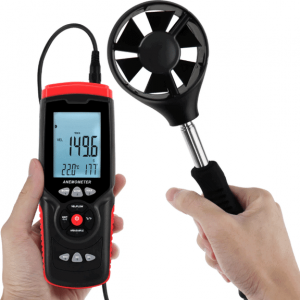
Anemometer
VSAQ
15
Q15: Which instrument tells the direction of the wind?
Answer
A wind vane shows the direction from which the wind is blowing.
VSAQ
16
Q16: Where is a wind sock commonly used?
Answer
A wind sock is commonly used at airports and industrial areas.
VSAQ
17
Q17: What is humidity?
Answer
Humidity is the amount of water vapor present in the air.
VSAQ
18
Q18: Which city has higher humidity, Kochi or Jaipur?
Answer
Kochi has higher humidity compared to Jaipur.
VSAQ
19
Q19: What happens to evaporation when humidity is high?
Answer
High humidity slows down the rate of evaporation.
VSAQ
20
Q20: Which instrument is used to measure humidity?
Answer
A hygrometer is used to measure the amount of humidity in the air.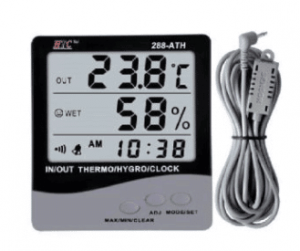
Hygrometer
VSAQ
21
Q21: What is the range of relative humidity in dry weather?
Answer
Dry weather has relative humidity between 20% and 40%.
VSAQ
22
Q22: How is snowfall measured in terms of precipitation?
Answer
Snowfall is melted before measuring it with a rain gauge.
VSAQ
23
Q23: What is the mean daily temperature formula?
Answer
Mean daily temperature is calculated by adding maximum and minimum temperature and dividing by two.
VSAQ
24
Q24: What is an Automated Weather Station (AWS)?
Answer
An Automated Weather Station is a system that measures weather data using sensors without human help.
VSAQ
25
Q25: Who is responsible for issuing weather warnings in India?
Answer
The India Meteorological Department (IMD) is responsible for issuing weather warnings in India.
VSAQ
26
Q26: What is the standard atmospheric pressure at sea level?
Answer
1013 millibars.
VSAQ
27
Q27: Which tool is used to measure rainfall?
Answer
Rain gauge.
VSAQ
28
Q28: Name the instrument used to measure humidity.
Answer
Hygrometer.
VSAQ
29
Q29: In which Indian city was an AWS set up in 2023 at over 4800 meters?
Answer
Sikkim.
VSAQ
30
Q30: What does IMD stand for?
Answer
India Meteorological Department.
VSAQ