LAQ for Chapter 2 Understanding the Weather Class 7 Social Science NCERT
Important Questions1
Q1: Explain the five main elements of weather and how they affect us.
Answer
• Temperature tells us how hot or cold the air is.
• Precipitation includes rain or snow.
• Atmospheric pressure influences storms and calm weather.
• Wind helps with pollination and affects rainfall and soil.
• Humidity determines how dry or sticky the air feels.
These elements together define daily weather.
LAQ
2
Q2: How is temperature measured, and what types of thermometers are used?
Answer
• Temperature is measured using thermometers.• Clinical thermometers are used for body temperature, while laboratory thermometers measure environmental temperatures.
• Digital thermometers are modern, accurate, and can store data.
• They can also record maximum and minimum temperatures.
• Temperature is recorded in Celsius or Fahrenheit.
• Understanding temperature patterns helps in weather forecasting and health safety.
LAQ
3
Q3: Describe how rainfall is measured using a rain gauge.
Answer
• A rain gauge collects rain through a funnel into a cylinder.• The depth of the water is then measured on a scale, usually in millimeters.
• If it snows, the snow is melted before measurement.
• This helps in calculating the total precipitation over a day or month.
• Accurate rainfall data is important for farming, water management, and flood control.
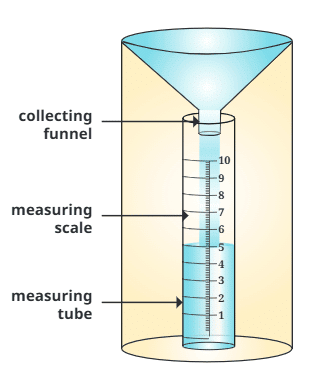
Rain Gauge
LAQ
4
Q4: What is atmospheric pressure, and why is it important in weather studies?
Answer
• Atmospheric pressure is the weight of air pressing down on Earth’s surface.• It is measured using a barometer, typically in millibars.
• Low pressure can lead to storms and cyclones, while high pressure brings clear skies.
• Pressure also varies with height—lower at high altitudes and higher at sea level.
• Knowing pressure changes helps meteorologists predict weather conditions.
LAQ
5
Q5: How do wind instruments help us understand weather better?
Answer
• Wind direction is shown using a wind vane, while speed is measured with an anemometer.• Wind socks are used at airports to observe wind movement.
• These tools help in studying wind behavior, which affects rainfall, seed dispersal, and flying conditions.
• Wind moves from high to low pressure areas.
• Measuring wind is important for pilots, sailors, and farmers.
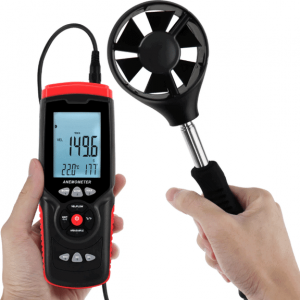
Anemometer
LAQ
6
Q6: What are the differences between dry and humid weather?
Answer
• Dry weather has low humidity, usually 20–40%, and makes sweat evaporate faster.• Humid weather has high moisture in the air (60–80%), making us feel sticky and uncomfortable.
• High humidity slows down evaporation, affects comfort levels, and makes clothes dry slower.
• Coastal areas like Kochi are humid, while places like Jaipur are dry.
• These conditions affect lifestyle and health.
LAQ
7
Q7: How do weather stations function, and what instruments do they use?
Answer
• Weather stations collect data on temperature, rainfall, wind, humidity, and air pressure.• They use tools like thermometers, rain gauges, barometers, anemometers, and hygrometers.
• This information helps track and forecast weather.
• Automated Weather Stations (AWS) use sensors to record data without human effort.
• Weather stations are set up in cities, farms, and high-altitude areas for accuracy.
LAQ
8
Q8: Why is understanding weather important for different professions and governments?
Answer
• Farmers need to know when to plant or protect crops.• Pilots and sailors need wind and visibility updates for safety.
• Governments rely on forecasts to prepare for disasters like cyclones or floods.
• Accurate weather data helps plan relief operations and avoid loss.
• Weather understanding supports decision-making in agriculture, transport, and disaster management.
LAQ