SAQ for Chapter 12 Understanding Markets Class 7 Social Science NCERT
Important Questions1
Q1: How do price changes affect the supply and demand of goods in a market?
Answer
If the price is set too high, fewer buyers may purchase, leading to a decrease in demand. On the other hand, if the price is set too low, more buyers will purchase, but the seller may raise the price to earn more, adjusting the supply accordingly.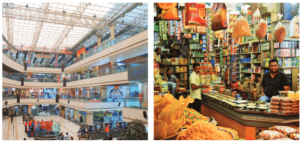
Markets
SAQ
2
Q2: What are the main differences between wholesale and retail markets?
Answer
Wholesale markets involve large-scale purchases of goods from producers and are typically sold in bulk, while retail markets sell smaller quantities to individual consumers. Retailers buy from wholesalers and sell directly to customers.
SAQ
3
Q3: How do government controls, like price ceilings and floors, affect markets?
Answer
Price ceilings prevent sellers from charging excessively high prices, ensuring goods remain affordable for consumers. Price floors prevent prices from falling too low, ensuring producers are fairly compensated, especially in essential sectors like agriculture.
SAQ
4
Q4: What is the importance of guilds in ancient markets?
Answer
Guilds were organizations of traders or craftsmen that established rules, standards, and practices for their trade. They ensured fair transactions and supported each other, fostering a cooperative environment for businesses to grow.
SAQ
5
Q5: How does the demand and supply model work in a market?
Answer
In the demand and supply model, the price of goods is determined by the interaction between buyers’ demand and sellers’ supply. When demand exceeds supply, prices rise, and when supply exceeds demand, prices fall to balance the market.
SAQ
6
Q6: What role do markets play in a country’s economy?
Answer
Markets are essential for the economy as they enable the exchange of goods and services, contributing to economic growth. They facilitate the movement of resources, help create jobs, and ensure that products reach consumers efficiently.
SAQ
7
Q7: How does the barter system work, and why was it replaced by money?
Answer
The barter system involves exchanging goods and services directly without using money. It was replaced by money to make transactions more efficient, as money is a universally accepted medium that eliminates the need for a direct exchange of goods.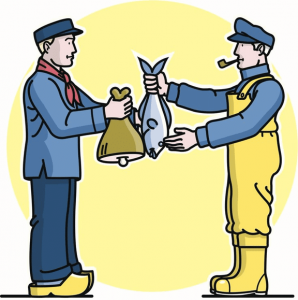
Barter System
SAQ
8
Q8: How did markets evolve with the advent of online platforms?
Answer
Online markets enable transactions to occur remotely through websites or apps, allowing buyers to access a wider range of products and services. These platforms offer convenience, greater variety, and sometimes better prices than physical markets.
SAQ
9
Q9: What are domestic and international markets?
Answer
Domestic markets involve trade within a country's borders, while international markets involve the exchange of goods and services between countries. International markets are critical for accessing goods not available domestically and for expanding business opportunities globally.
SAQ
10
Q10: How do physical and online markets differ in terms of consumer experience?
Answer
In physical markets, consumers can see, touch, and try goods before buying, offering a direct experience. Online markets, however, provide convenience and a wider selection but lack the ability for consumers to physically inspect items before purchasing.
SAQ
11
Q11: What is the role of distributors in the market?
Answer
Distributors play a vital role in connecting wholesalers to retailers, ensuring goods reach their final destinations. They help manage the logistics of large-scale distribution, especially in regions where direct access to retailers is challenging.
SAQ
12
Q12: How does government regulation ensure fair pricing and safety in markets?
Answer
The government regulates markets by setting price limits on essential goods, ensuring the quality and safety of products, and protecting consumers. These regulations help avoid exploitation, maintain product standards, and promote consumer trust in the marketplace.
SAQ
13
Q13: Explain the role of the government in regulating markets.
Answer
The government regulates markets by controlling prices, ensuring product quality, and setting safety standards to protect consumers and maintain fair trade practices.
SAQ
14
Q14: How does demand affect prices in a market?
Answer
If demand for a product is high, prices tend to increase. If demand is low, prices may decrease to attract buyers.
SAQ
15
Q15: What are the key features of a wholesale market?
Answer
Wholesale markets deal with large quantities of goods, sold in bulk to retailers. They help in efficient distribution and lower prices compared to retail.
SAQ
16
Q16: What is the significance of the Kumbh Mela in India?
Answer
The Kumbh Mela is a significant religious event that brings millions of people together for a holy dip in the rivers, symbolizing spirituality and unity.
SAQ
17
Q17: How does the online market differ from the physical market?
Answer
In online markets, transactions happen via websites or apps, offering convenience but lacking physical interaction, unlike in physical markets where goods can be seen and touched)
SAQ