SAQ for Chapter 11 Light: Shadows and Reflections Class 7 Science NCERT
Important Questions1
Q1: What is the difference between luminous and non-luminous objects?
Answer
Luminous objects are those that emit their own light, such as the Sun, stars, and fireflies. Non-luminous objects do not emit light; they reflect light from luminous objects. The Moon is an example of a non-luminous object because it only reflects sunlight.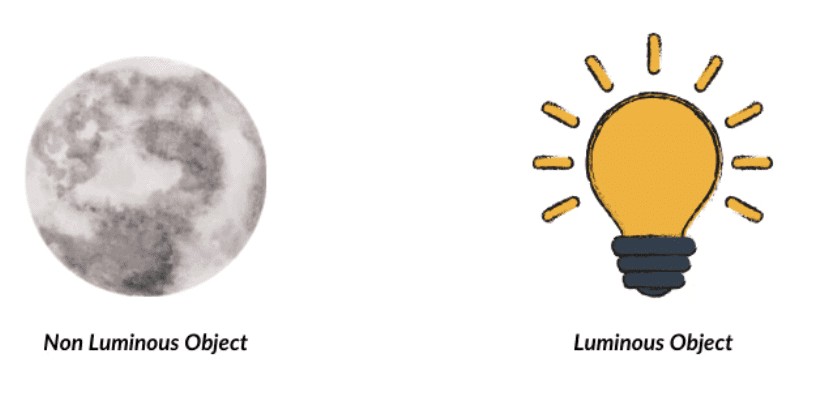
SAQ
2
Q2: How does light travel?
Answer
Light travels in a straight line, as demonstrated by various activities where light passes through holes or is blocked by objects. This straight-line travel is known as the rectilinear propagation of light.
SAQ
3
Q3: What happens when light passes through transparent materials?
Answer
When light passes through transparent materials, like glass or clear water, it passes almost completely through them, allowing us to see through the material clearly. Transparent materials allow most of the light to pass through without scattering.
SAQ
4
Q4: How does the Moon produce light?
Answer
The Moon does not produce its own light. It is a non-luminous object that reflects the light of the Sun. This reflected light is what we see as moonlight. The surface of the Moon reflects sunlight, but because the surface is rough, the light is scattered.
SAQ
5
Q5: What is lateral inversion in mirrors?
Answer
Lateral inversion refers to the reversal of left and right in an image formed by a plane mirror. When you look into a mirror, the image appears reversed, such as your left hand appearing as the right hand in the reflection.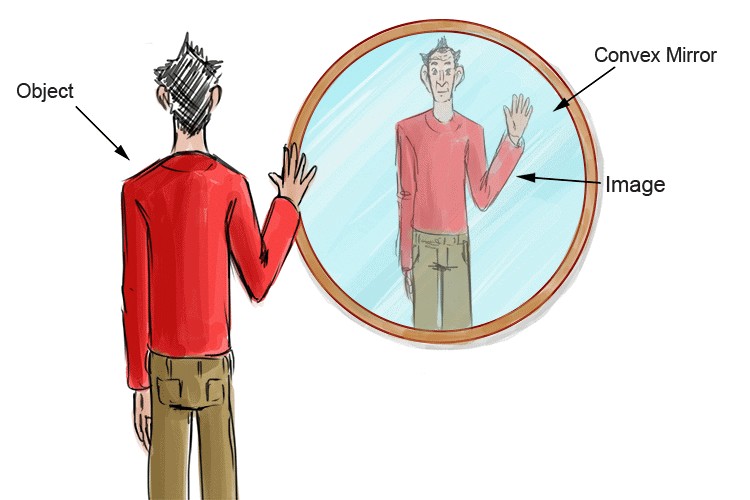
SAQ
6
Q6: Why do opaque objects create shadows?
Answer
Opaque objects block the path of light, and as a result, a dark area forms on the opposite side of the object. This dark area is the shadow. Since opaque objects completely block light, they create the darkest shadows.
SAQ
7
Q7: What happens when light is reflected by a mirror?
Answer
When light strikes a mirror, it changes direction and is reflected. The angle at which light hits the mirror (angle of incidence) is equal to the angle at which it is reflected (angle of reflection). This is known as the law of reflection.
SAQ
8
Q8: How do you form a shadow using a torch?
Answer
To form a shadow, you need a light source (like a torch), an opaque object to block the light, and a screen (like a wall or a cardboard). When the object blocks the light, the shadow forms on the screen in the shape of the object.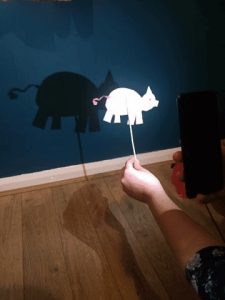
SAQ
9
Q9: How does a periscope work?
Answer
A periscope allows you to see objects that are out of your direct line of sight by using two mirrors placed at 45° angles inside a box. Light entering the periscope is reflected off both mirrors, allowing you to see over obstacles or around corners.
SAQ
10
Q10: What is the role of mirrors in forming images?
Answer
Mirrors form images by reflecting light. The image formed in a plane mirror is virtual, meaning it cannot be captured on a screen. The image is always upright, of the same size as the object, and laterally inverted (left-right reversal).
SAQ