LAQ for Chapter 11 Light: Shadows and Reflections Class 7 Science NCERT
Important Questions1
Answer
Light travels in a straight line. This is known as the rectilinear propagation of light. When light strikes different materials, it behaves in different ways:• Transparent materials, like glass and clear water, allow light to pass through them completely. This means we can see through them clearly.
• Translucent materials, like tracing paper or frosted glass, let some light pass through but not all. They cause the light to scatter, so objects on the other side are not clearly visible.
• Opaque materials, like cardboard or wood, block light completely. No light passes through opaque objects, which is why we can't see through them.
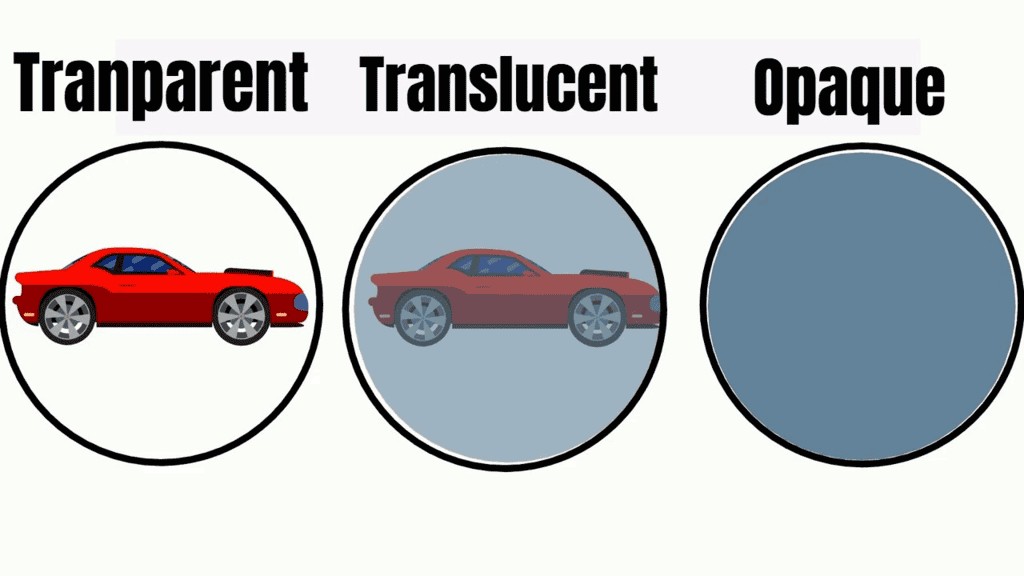
In experiments, when you place objects in the path of a torch beam, you can observe that light passes through transparent materials but either partially or completely blocks through translucent and opaque materials.
2
Answer
Shadows are formed when an object blocks the path of light. Since light travels in a straight line, when it hits an opaque object, the area behind the object will not receive light. This creates a shadow. The size, shape, and sharpness of the shadow depend on the position of the object, the light source, and the screen where the shadow is cast.
• Opaque objects create darker shadows because they block most or all of the light.
• Translucent objects create lighter shadows because some light passes through them.
• Even transparent objects, like clear plastic, can create faint shadows, as they only slightly allow light to pass through.
When you move the object closer to the light source, the shadow becomes larger. If you move the object further away, the shadow becomes smaller. The position of the object also affects the sharpness of the shadow—closer objects create sharp shadows, while distant objects create blurry ones.
3
Answer
Mirrors reflect light by changing the direction of the light that falls on them. When light hits a mirror, it bounces off the surface. This reflection allows us to see an image of objects placed in front of the mirror. The reflection follows a law called the law of reflection, which states that the angle at which the light hits the mirror (angle of incidence) is equal to the angle at which it reflects off (angle of reflection).
In experiments with mirrors:
• If you direct light onto a flat, shiny surface (like a mirror), it will reflect in a straight line to another surface or wall.
• If the mirror is tilted, the direction of the reflected light will change, but the angle of incidence will always equal the angle of reflection.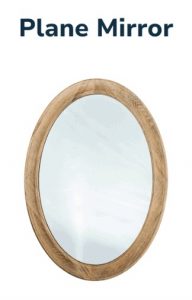
The images formed in a plane mirror are:
• Erect (not upside down),
• Same size as the object,
• Laterally inverted (left and right are reversed),
• Cannot be projected on a screen because they are virtual.
4
Answer
The Moon does not produce its own light. It is a non-luminous object, which means it doesn’t emit light. Instead, the Moon reflects the light of the Sun that falls on its surface. This reflected light is what we see as moonlight.
The Moon's surface is rough and uneven, so the light it reflects is scattered. This is why moonlight is not as bright as sunlight. During the day, we can’t see the moon's light because the sunlight is much brighter. But at night, when the Sun’s light is not in the sky, the moon’s reflection becomes visible to us.
This phenomenon of reflection is similar to how mirrors work. The only difference is that the Moon’s surface reflects light unevenly due to its craters and rough texture, which is why the moonlight we see is softer and more diffused than sunlight.
5
Answer
A periscope is a simple device that allows you to see things that are hidden from direct view. It works by using two mirrors arranged at an angle to each other. Here's how to make a simple periscope:
• Take a rectangular box and cut two holes on opposite sides.
• Place two plane mirrors inside the box at an angle of 45° to each other.
• Through one hole, you can look into the periscope, and through the other hole, you can see the image reflected by the mirrors.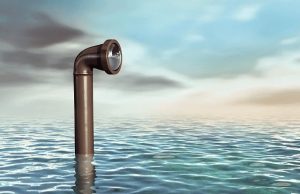
When light enters through the first hole, it strikes the first mirror and is reflected onto the second mirror. The second mirror then reflects the light to the second hole, allowing you to see objects that are outside the direct line of sight.
Periscopes are often used in submarines, tanks, or by soldiers to observe the surroundings without exposing themselves. They are useful for seeing over obstacles or around corners.