SAQ for Chapter 9 Life Processes in Animals Class 7 Science NCERT
Important Questions1
Q1: What do you mean by animal nutrition?
Answer
Animal nutrition refers to the study of the nutritional needs of animals, which includes:• The requirement for nutrients essential for growth, maintenance, and reproduction.
• The mode of food intake, which varies among different species.
• The utilisation of food within the body for various physiological processes.
Understanding these aspects is crucial for improving animal health and productivity.
SAQ
2
Q2: What is digestion?
Answer
Digestion is the process of breaking down complex components of food, such as carbohydrates, into simpler substances. These simpler substances are then absorbed and assimilated by the body.
SAQ
3
Q3: Name different modes of feeding in animals?
Answer
Scraping, chewing, brewing, capturing and swallowing, sucking etc. are the different mode of feeding in animals.
SAQ
4
Q4: What are the functions of the tongue in human body?
Answer
The functions of the tongue are as follows:• Speech: It is essential for talking; it is not possible to articulate words without it.
• Mixing: The tongue mixes saliva with food during chewing, aiding in the swallowing process.
• Taste: Thanks to the presence of taste buds, it identifies various flavours such as sweet and salty.
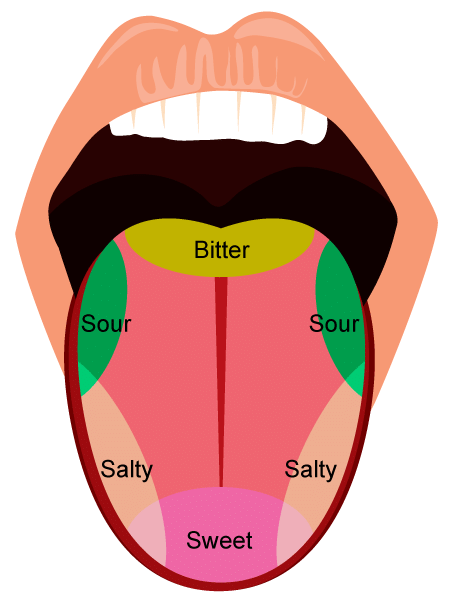
Taste Buds
SAQ
5
Q5: Name the main organs of digestive system.
Answer
The main organs of digestive system are liver, Gall bladder Stomach, Pancreas, Small intestine, Large intestine, Rectum, Anus. The digestive tract and the associated glands together constitute the digestive system.
SAQ
6
Q6: Explain tooth decay?
Answer
Our mouth contains some useful bacteria, but if we do not clean our teeth and mouth after eating, harmful bacteria can also begin to thrive. These harmful bacteria break down the sugars from leftover food and release acids. Over time, these acids gradually damage the teeth and lead to tooth decay.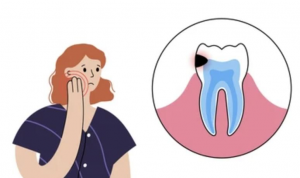
SAQ
7
Q7: Glucose is considered as the source of instant energy, why?
Answer
Glucose is the simplest form of carbohydrate and can be easily broken down to provide energy. This property makes glucose a source of instant energy for the body. Furthermore, glucose mixes directly into the bloodstream, ensuring it is readily available for immediate use by our cells.
SAQ
8
Q8: What are secreted inside the stomach?
Answer
Gastric juice is secreted by the walls of the stomach and contains hydrochloric acid (HCl) and pepsin. HCl plays a crucial role in killing germs present in food. After mixing with food, it provides an acidic medium that is essential for activating the pepsin enzyme. Pepsin is responsible for digesting proteins into peptides.
SAQ
9
Q9: Explain digestive enzymes?
Answer
There are different types of enzymes which are used for the digestion of different food materials like carbohydrates, fats, protein etc. The process of digestion involves the association of several catalytic organic compounds such as amylase, pepsin, lipase, trypsin etc. These organic compounds are known as digestive enzymes.
SAQ
10
Q10: What do you mean by absorption in terms of digestion of food?
Answer
The process of absorption occurs after food has been digested in the stomach. It involves the transfer of nutrients from the food into the blood vessels located in the walls of the intestine. This critical step allows the body to utilize the nutrients for energy and growth.
SAQ
11
Q11: Name and explain the type of carbohydrates that can be digested by ruminants but not by humans.
Answer
Cellulose is the type of carbohydrate that can be digested by ruminants but not by humans. Ruminants possess a large, sac-like structure located between the small intestine and large intestine, which is essential for the digestion of cellulose. The cellulose in their food is broken down by the action of specific bacteria that are absent in humans.
SAQ
12
Q12: What role does villi performs in the small intestine?
Answer
The villi increase the surface area for the absorption of digested food. Their surface is designed to effectively absorb the digested materials and transfer them into the blood. Once absorbed, these substances are transported via blood vessels to various organs of the body.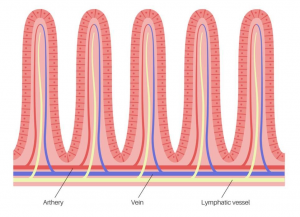
SAQ
13
Q13: What is rumination?
Answer
Rumination is a process in which partially digested food is regurgitated as small lumps and then chewed again. Animals that engage in this process are known as ruminants.
SAQ
14
Q14: How does digestion occur in ruminants grass-eating animals?
Answer
Ruminants quickly swallow grass and store it in a separate part of the stomach called the rumen. Here, the food undergoes partial digestion and is referred to as cud. Later, the cud returns to the mouth in small lumps, and the animal chews it. This process is known as rumination. The cellulose present in grass is digested in the rumen by the action of specific bacteria, which are not found in humans.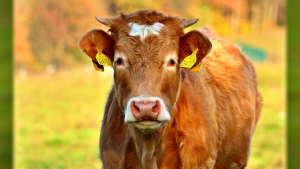
SAQ
15
Q15: What is the site of production of bile? Which component of the food does it digest?
Answer
Bile is produced in the liver and is stored in a sac-like structure called the gallbladder. It plays an important role in the digestion of fats, acting on them to convert them into a simpler form.
SAQ
16
Q16: What happens to the food in stomach of the digestive tract?
Answer
The inner lining of the stomach secretes mucus, hydrochloric acid, and digestive juices. The mucus protects the lining of the stomach. The hydrochloric acid kills many bacteria that enter with food and creates an acidic environment in the stomach. Additionally, the digestive juices break down proteins into simpler substances.
SAQ
17
Q17: What happens to the food in large intestine of the digestive tract?
Answer
The food that remains undigested and unabsorbed enters the large intestine from the small intestine. The large intestine is approximately 1.5 metres in length. Its primary function is to absorb water and some salts from the undigested food material.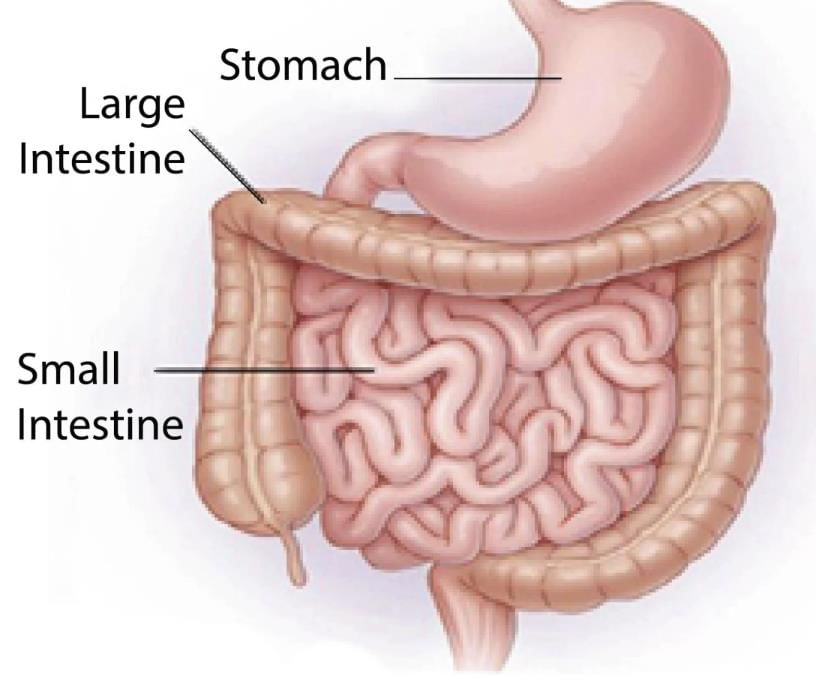
SAQ