LAQ for Chapter 9 Life Processes in Animals Class 7 Science NCERT
Important Questions1
Q1: Can we survive only on raw, leafy vegetables / grass? Discuss.
Answer
Animals, including most bacteria and non-green plants, as well as humans, do not have the ability to synthesize their own food. Therefore, they rely on autotrophs for their food supply, either directly or indirectly. Green plants, such as leafy vegetables and grass, trap solar energy and manufacture their food in the form of glucose. While leafy vegetables and grass are nutritious, they may not provide sufficient energy for human survival alone. Humans require a varied diet that includes proteins and other nutrients that are not typically found in high quantities in raw, leafy vegetables or grass. In conclusion, although leafy vegetables and grass play a vital role in a healthy diet, relying solely on them may not meet all the nutritional needs of humans.
LAQ
2
Q2: What happens to the food in small intestine of the digestive tract?
Answer
The small intestine is highly coiled and is about 7.5 metres long. Liver is the largest gland in the body. It secretes bile juice that is stored in a sac called the gall bladder. It digests fats. The pancreas is cream colour red gland secretes pancreatic juice that acts on carbohydrates and proteins and changes them into simpler forms. The carbohydrates get broken into simple sugars such as glucose, fats into fatty acids and glycerol, and proteins into amino acid, she digested food can now pass into the blood vessels in the wall of the intestine having thousands of finger-like villi. The surface of the villi absorbs the digested food materials. The absorbed substances are transported via the blood vessels to different organs of the body.
LAQ
3
Q3: Draw a labelled diagram showing digestive system of cow.
Answer
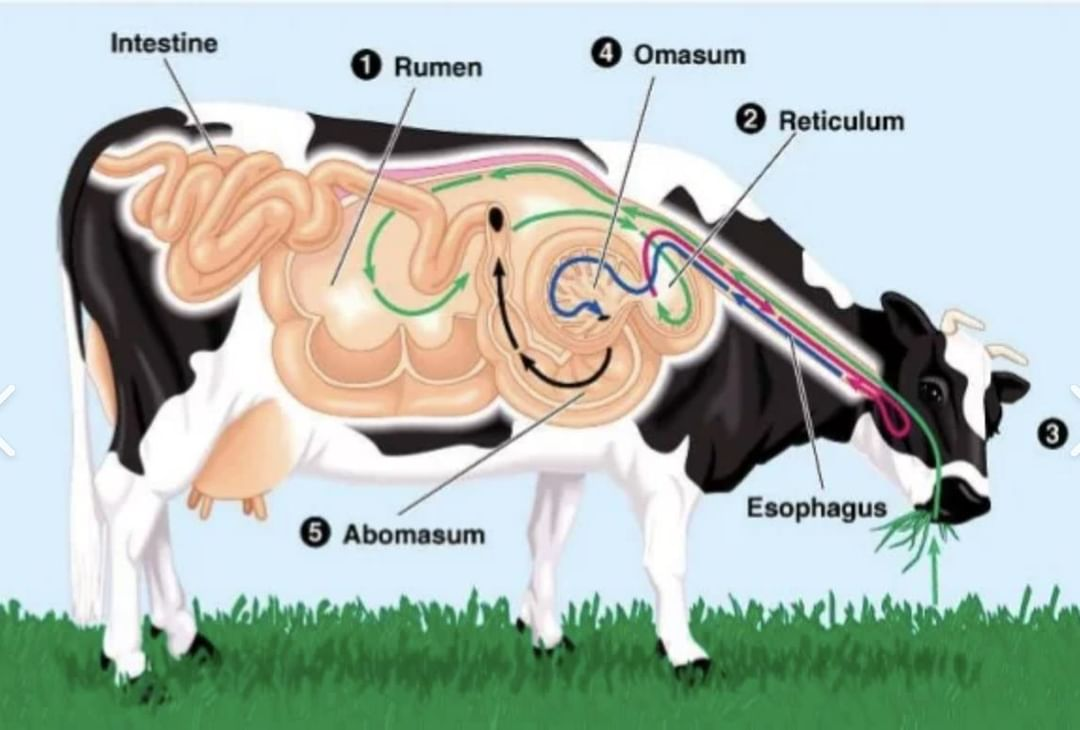
LAQ