SAQ for Chapter 8 How the Land Becomes Sacred Class 7 Social Science NCERT
Important Questions1
Q1: How does the concept of sacred geography connect people across India?
Answer
Sacred geography connects people by linking pilgrimage sites and sacred spaces, fostering cultural exchanges and shared spiritual values. Pilgrims traveling to these sites from different regions encounter diverse traditions but share common religious goals.
SAQ
2
Q2: What role do rivers play in sacred geography?
Answer
Rivers are considered divine in sacred geography, with many being worshipped as goddesses. Rituals are performed at riverbanks, and places like the Ganga and Yamuna are seen as lifelines for both spiritual and physical sustenance.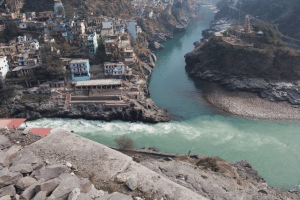
Sangam of Rivers
SAQ
3
Q3: Why is the Char Dhām Yātrā significant?
Answer
The Char Dhām Yātrā, consisting of four pilgrimage sites in different parts of India, is significant as it connects the northern, southern, eastern, and western regions, promoting unity and spiritual growth across diverse cultures.
SAQ
4
Q4: How does sacred ecology contribute to environmental preservation?
Answer
Sacred ecology links spiritual beliefs with nature conservation by encouraging the protection of rivers, mountains, and forests. By viewing nature as sacred, communities feel responsible for preserving these spaces from harm or exploitation.
SAQ
5
Q5: What is the story behind the Shakti Pithas?
Answer
The Shakti Pithas are sacred sites where the body parts of Sati, the divine mother, are believed to have fallen after Vishnu cut her body. These sites are revered as places of worship for the goddess Shakti.
SAQ
6
Q6: How does the Kumbh Mela reflect the significance of sacred geography?
Answer
The Kumbh Mela, held at four sacred river sites, reflects sacred geography by bringing millions together to bathe in the holy rivers. It’s an event that connects various regions of India through shared religious practices and beliefs.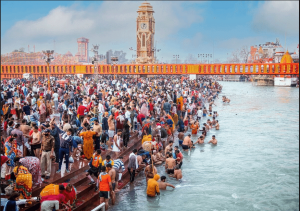
Kumbh Mela
SAQ
7
Q7: What is the significance of sacred groves in India?
Answer
Sacred groves are protected forests, often associated with deities, and serve as a way to conserve biodiversity. They play an important role in maintaining the ecological balance by preserving unique plant and animal species.
SAQ
8
Q8: How do trees, like the peepul, feature in sacred geography?
Answer
In sacred geography, trees like the peepul are considered sacred, with religious and spiritual significance. The peepul tree, especially at Bodh Gaya, is associated with Buddha’s enlightenment and is revered in Hinduism, Buddhism, Sikhism, and Jainism.
SAQ
9
Q9: How did pilgrimage routes overlap with trade routes in ancient India?
Answer
Pilgrimage routes often overlapped with trade routes, facilitating not just religious journeys but also the exchange of goods, ideas, and culture, enriching both spiritual and economic life.
SAQ
10
Q10: Why is the Ganga river considered sacred in Hinduism?
Answer
The Ganga river is considered sacred in Hinduism because it is believed to be a goddess who purifies souls. Pilgrims bathe in the river to cleanse their sins and seek spiritual liberation.
SAQ
11
Q11: How do sacred mountains relate to religious beliefs?
Answer
Sacred mountains, like the Himalayas, are believed to be gateways to heaven. Many pilgrimage sites are located at mountain peaks, symbolizing the physical and spiritual journey to divine realms.
SAQ
12
Q12: What impact has pollution had on sacred sites in India?
Answer
Pollution has harmed sacred sites, like rivers and temples, leading to a strained relationship between people and nature. The pollution of holy rivers like the Yamuna and Ganga disrupts spiritual practices and threatens the sanctity of these sites.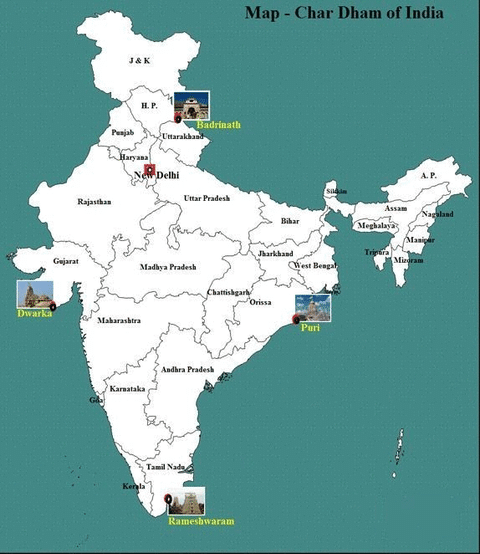
Char Dham
SAQ
13
Q13: How does sacred geography help unite India?
Answer
Sacred geography unites India by connecting diverse regions through shared pilgrimage routes and sacred sites, fostering cultural exchange and unity.
SAQ
14
Q14: What is the significance of the Kumbh Mela in Indian culture?
Answer
The Kumbh Mela is a major pilgrimage that brings millions of people together every six years, symbolizing the unity of diverse communities and the importance of sacred rituals.Kumbh Mela
SAQ
15
Q15: How does sacred ecology contribute to environmental protection?
Answer
Sacred ecology promotes the protection of nature by treating rivers, mountains, and forests as sacred spaces, encouraging people to protect them from pollution and exploitation.
SAQ
16
Q16: Why are rivers considered sacred in India?
Answer
Rivers like the Ganga and Yamuna are worshipped as goddesses and considered sacred in Hinduism due to their life-giving properties and spiritual significance.
SAQ
17
Q17: How does sacred geography influence trade in India?
Answer
Pilgrimage routes often overlap with trade routes, facilitating the exchange of goods, ideas, and cultures, thereby enriching both spiritual and economic life.
SAQ