LAQ for Chapter 10 Life Processes in Plant Class 7 Science NCERT
Important Questions1
Q1: Explain the process of photosynthesis in detail.
Answer
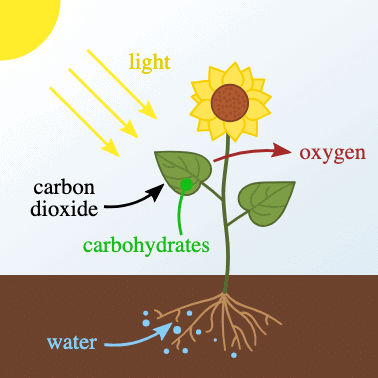
Photosynthesis is a process by which plants produce their own food. It takes place in the leaves, mainly in the chloroplasts, which contain chlorophyll. During photosynthesis, plants absorb sunlight through chlorophyll. The sunlight, along with water absorbed by the roots and carbon dioxide from the air (through stomata), reacts to produce glucose (a simple carbohydrate) and oxygen. The word equation for photosynthesis is:Carbon dioxide + Water → Glucose + Oxygen
Glucose is used by the plant as an immediate energy source or stored as starch for later use. Oxygen is released as a by-product, which is crucial for the survival of other organisms, including humans.
LAQ
2
Q2: How do plants transport water, minerals, and food within their structure?
Answer
Plants have a specialized transport system to move water, minerals, and food to different parts. Water and minerals are absorbed by the roots from the soil and transported upwards to the leaves through xylem tissue. The xylem acts like a pipeline, carrying water and minerals to the stems, leaves, and flowers.Food produced during photosynthesis (mainly glucose) is transported through phloem, another type of vascular tissue. The phloem carries the food from the leaves, where it is made, to other parts of the plant like roots, stems, and fruits. These processes ensure that the plant gets the necessary nutrients for growth, energy, and reproduction.
LAQ
3
Q3: Describe the role of sunlight, water, and chlorophyll in plant growth and food production.
Answer
Sunlight, water, and chlorophyll are essential for plant growth and food production.• Sunlight provides energy for photosynthesis. Chlorophyll absorbs sunlight and helps convert it into chemical energy.
• Water is necessary for transporting nutrients through the plant and helps maintain its structure. It also participates in photosynthesis by combining with carbon dioxide to form glucose.
• Chlorophyll, the green pigment in leaves, captures sunlight and enables plants to perform photosynthesis. Without chlorophyll, plants cannot produce food effectively, even if they have sunlight and water.
LAQ
4
Q4: What is respiration in plants, and how does it differ from photosynthesis?
Answer
Respiration in plants is a process where plants break down glucose (produced during photosynthesis) using oxygen to release energy. The equation for respiration is:Glucose + Oxygen → Carbon dioxide + Water + Energy
This energy is used for growth, repair, and other functions within the plant. Respiration occurs in all parts of the plant, both green and non-green.
In contrast, photosynthesis occurs only in the green parts of the plant (mainly the leaves), where sunlight, water, and carbon dioxide are used to produce glucose and oxygen. Unlike respiration, which releases energy, photosynthesis stores energy in the form of glucose.
LAQ
5
Q5: How do stomata function in gas exchange during photosynthesis and respiration?
Answer
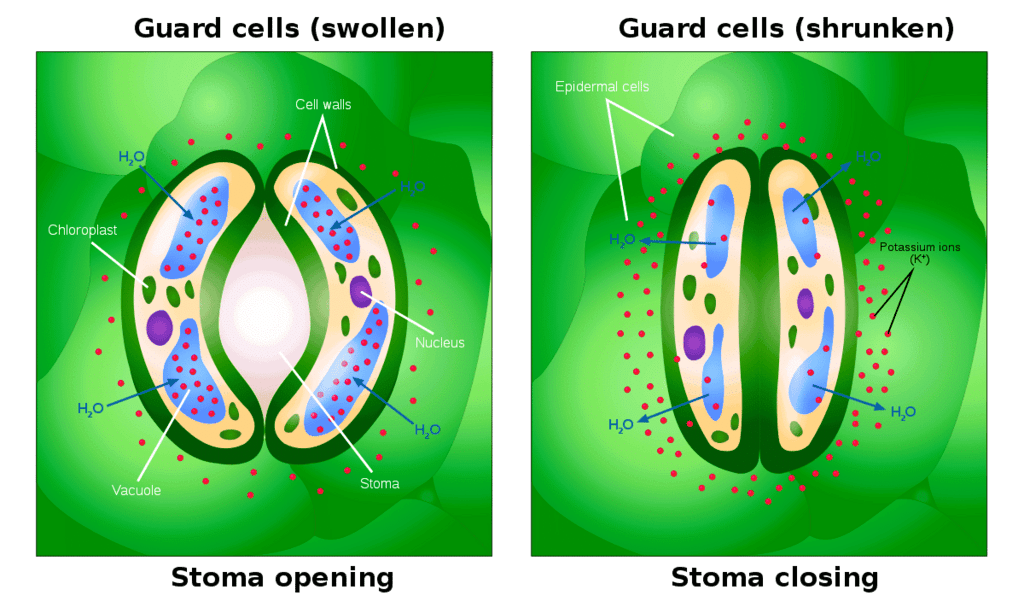
Stomata are tiny pores located on the surface of leaves that play a key role in gas exchange. During photosynthesis, stomata allow carbon dioxide to enter the leaf from the air, which is necessary for the production of glucose. At the same time, oxygen, a by-product of photosynthesis, exits the leaf through the stomata.In respiration, the stomata also allow oxygen to enter for the breakdown of glucose and the release of energy, while carbon dioxide, a waste product of respiration, exits the plant. The opening and closing of stomata are regulated by guard cells, ensuring that the plant can exchange gases efficiently while minimizing water loss.
LAQ