NCERT Revision Notes Chapter 3 Synthetic Fibres and Plastics Class 8 Science
CBSE NCERT Revision Notes1
Answer
• Introduction
• Synthetic fibres or man-made fibres
• Types of polymers
• Polyster
• Acrylic
• Plastics
→ Thermoplastics
→ Thermosetting plastics
→ Characteristics of plastics
→ Uses of plastics
• Biodegradable substances
• Non-biodegradable substances
2
Answer

→ Fabrics are made from fibres obtained from natural or artificial sources.
→ They are also used for making a large variety of household articles.
3
Answer
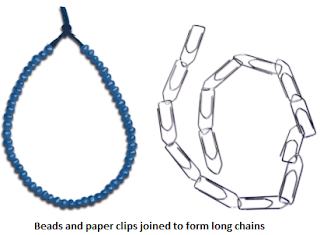
→ They are chains of small units joined together (each small unit is a chemical substance).
→ These small units combine to form a large single unit called a polymer.
4
Answer

• Addition polymers
→ Monomers combine together to form a giant molecule known as the polymer. No molecule is eliminated during formation of addition polymers.
→ Examples of addition polymer are polythene, polyvinyl chloride etc.
• Condensation polymers
→ Several small units of monomers combine with each other, along with elimination of simple molecule like water to form polymer unit.
→ Examples of condensation polymer are nylon-66, terylene etc.
5
Answer

→ Fabric made from polyester does not get wrinkled easily.
→ Common polyester includes terylene and PET
→ PET is used for making utensils, films, wires, bottles, etc. Terylene is used for making dress materials.
6
Answer

→ It is relatively cheaper than wool.
→ Sweaters, shawls and blankets are made from acrylic.
7
Answer

→ They dry up quickly, are durable, less expensive, readily available, and easy to maintain.
→ However, fabric made of synthetic fibre melts on catching fire and sticks to the body of person wearing it.
→ So, synthetic clothes should not be worn while working in kitchen or laboratory.
8
Answer

→ They are polymer-like synthetic fibres.
→ Arrangement of small units is linear or cross-linked.
→ Can be recycled, reused, coloured, melted, rolled into sheets, or made into wires.
9
Answer

• Thermoplastics
→ These are the plastics that get deformed easily on heating and can be bent easily.
Examples: polythene and PVC
• Thermosetting plastics
→ These are the plastics, which when moulded once, cannot be softened by heating. Examples: bakelite and melamine
10
Answer

→ They are non-reactive.
→ They are light, strong, and durable.
→ They are poor conductors of heat and electricity.
11
Answer

→ They are used to store various kinds of materials such as food items, chemicals etc.
→ It is widely used in various industries and for making a variety of household articles.
→ They are extensively used in health care industry for making syringes, threads for stitching wounds, doctor’s gloves, and other medical instruments.
→ Fire resistant plastics are used as a coating on the suits of the firemen.
12
Answer

→ These are the materials that decompose through natural processes such as by the action of bacteria.
Examples: paper, peels of vegetables, wood and fruits, etc.
13
Answer

→ These are the materials that are not easily decomposed by natural processes. Examples: plastic bags, metals, etc.
→ Plastics are not environment friendly as they cause environment pollution.
→ To minimize the environmental hazards, the 4R principle must be used.
• Reduce, Reuse, Recycle, and Recover.