Summary for The Magic Brush of Dreams Class 8 English Poorvi
Book Solutions1
Answer
- The poem tells the story of a girl named Gopi who has a magical brush.
- Gopi is tasked with gathering food but is more interested in painting.
- A mysterious man gives her a brush that can create real objects.
- Gopi decides to use her magic for good, helping the poor villagers.
- The Zamindar, a wealthy landowner, demands that Gopi paint for him.
- Gopi refuses to paint for the rich, choosing to help the needy instead.
- She is imprisoned by the Zamindar for her refusal.
- Gopi cleverly escapes using her magic brush to paint a road and a horse.
- She outsmarts the Zamindar and his men, leading them on a wild chase.
- In the end, Gopi paints a feast for the villagers, celebrating their victory.
- The poem teaches valuable lessons about kindness and using one's talents for good.
2
Stanza 1
Go and gather wild beans, Gopi,
Go and fetch some rice.
Go and pluck the mangoes
And bring home something nice.
Answer
Explanation:At the beginning of the poem, Gopi’s family gives her some tasks. She is asked to go out and collect wild beans, rice, and mangoes—some basic food items from the village or forest. The family wants her to bring back something good to eat. This shows that Gopi belongs to a simple, rural household where people gather food from nature.
3
Stanza 2
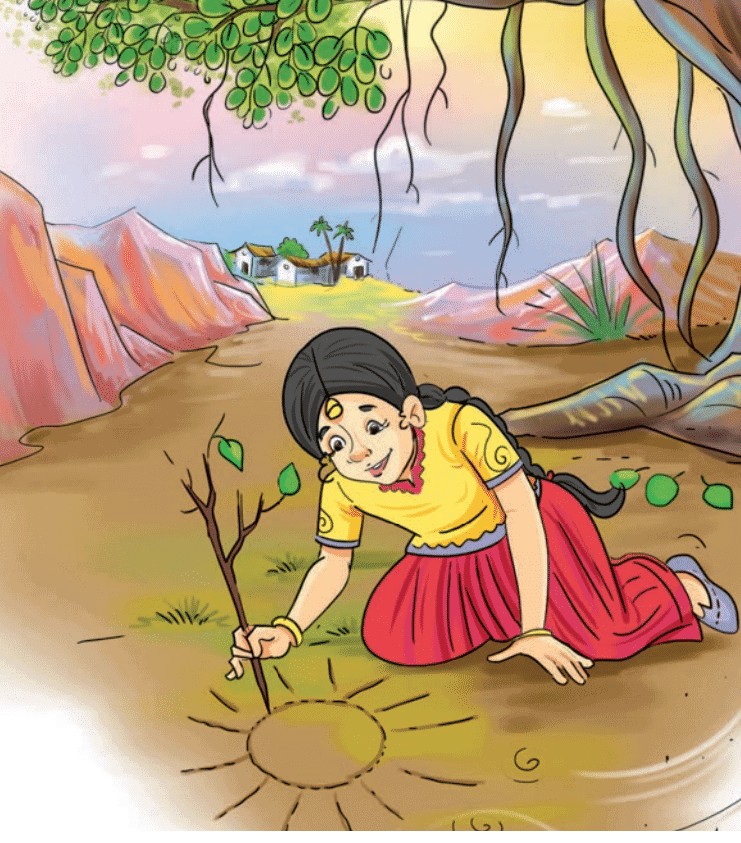
Gopi sits beneath the banyan,
A twig is in her hand.
She sits there drawing pictures,
Pictures in the sand.
Answer
Explanation:Instead of doing the work she was given, Gopi sits under a big banyan tree. She holds a small twig (like a thin stick) in her hand and begins drawing pictures in the sand. This shows her love for creativity and imagination. Even though she was sent to bring food, her mind is full of dreams and drawings.
4
Stanza 3
The winds blow by and sweep away
The pictures in the sand.
But on a stone there sits a man,
A brush is in his hand.
Answer
Explanation:The wind comes and wipes away Gopi’s drawings, but something magical happens. A mysterious man is sitting nearby on a stone. He holds a brush in his hand. This moment shows that something unusual or magical is about to happen in Gopi’s life.
5
Stanza 4
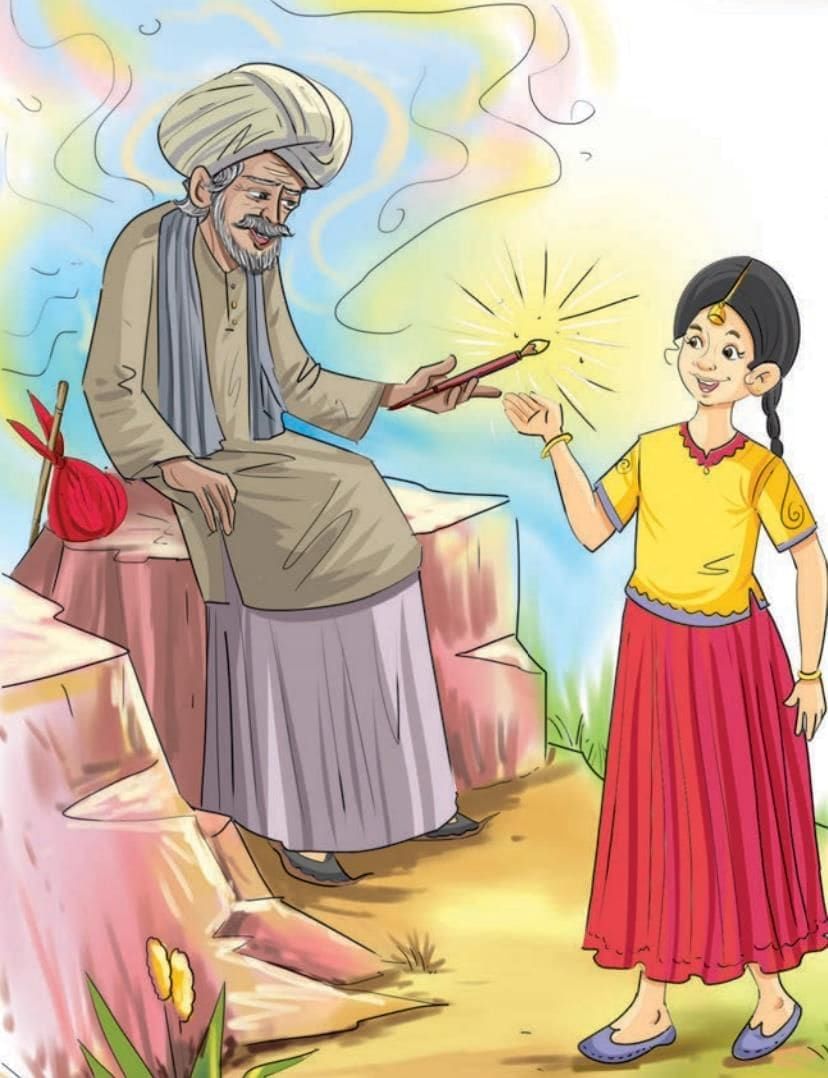
He looks around. He calls to Gopi.
“Come here!” he whispers. “Hush!
We mustn’t let the village know
About this magic brush.
Answer
Explanation:The man quietly calls Gopi over. He speaks in a whisper, telling her not to tell anyone else about the brush. He calls it a magic brush, which makes us wonder what powers it has. The secrecy shows that it is something very special and powerful, not for everyone to use.
6
Stanza 5
He slips the brush into her hand
And tells her to be sure,
“Paint not for the wealthy ones,
But only for the poor.
Answer
Explanation:The man hands the brush to Gopi and gives her a strong rule—she must never use it to help rich people (the wealthy), only the poor and needy. This shows that the brush is meant to bring justice and kindness, not to make greedy people richer.
7
Stanza 6
Did you gather wild beans, Gopi?
Did you fetch some rice?
Did you pluck the mangoes
And bring home something nice?
Answer
Explanation:Gopi’s family or someone from the house asks if she collected the food they sent her for. They expect her to return with real things like beans, rice, or mangoes. They don’t know anything about the magic brush yet.
8
Stanza 7
No beans, no rice, no mangoes!”
Gopi grins and runs inside.
She paints a bowl of khichdi
and waits,
Until the paint has dried
Answer
Explanation:Gopi smiles mischievously and runs inside. She hasn’t brought any real food, but she uses her new magic brush to paint a bowl of khichdi (a rice and lentil dish). She waits for the paint to dry, showing that she trusts the brush’s powers. This is the first time we see how the brush works.
9
Stanza 8
The bowl is full of khichdi, Gopi!”
Into the house the villagers streamed
The young and old all wish to see
The magic brush of dreams.
Answer
Explanation:Amazingly, the painting turns into a real bowl of khichdi! The news spreads quickly, and many villagers come to Gopi’s house to see this “magic brush of dreams.” People of all ages are curious and amazed by what she can do. Gopi is now seen as someone special in the village.
10
Stanza 9
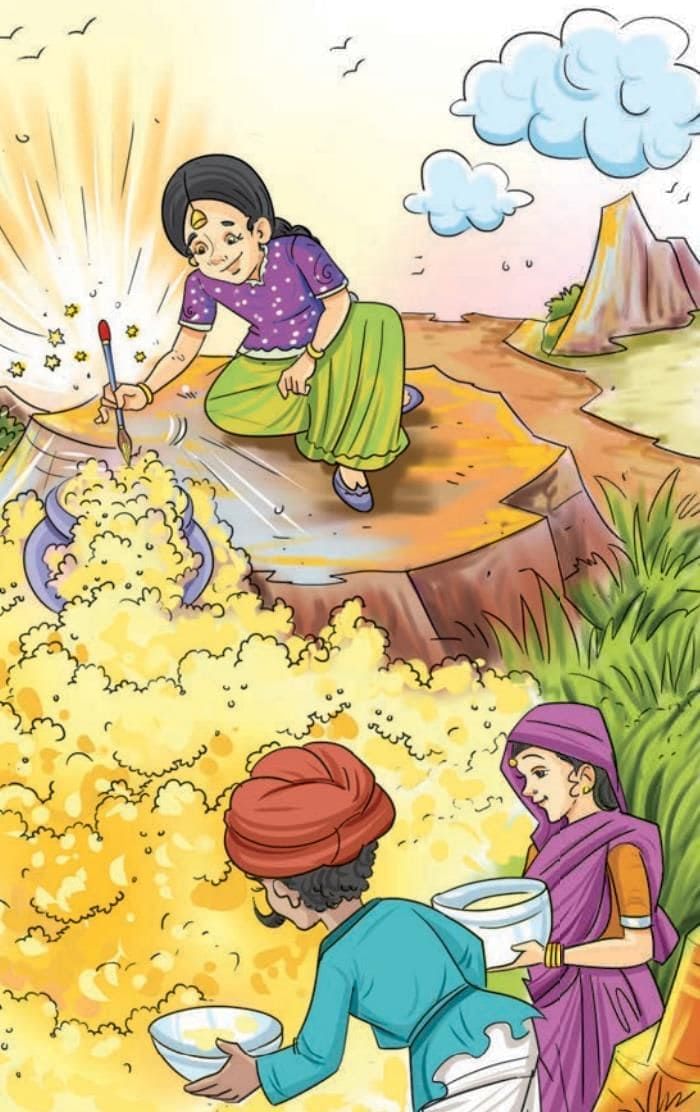
She paints a muffler for a farmer,
A plough for another man,
A shawl for a grandmother,
And for a girl, a fan.
Answer
Explanation:Gopi uses the magic brush to help people in the village. She paints useful things like a muffler (scarf) to keep a farmer warm, a plough to help with farming, a shawl for a grandmother to stay cozy, and a fan to keep a girl cool. All these things become real, proving Gopi is generous and thoughtful.
11
Stanza 10
And soon the news spreads far and wide,
Through forests, fields, and plains,
Until the Zamindar himself
Hears of these magic gains.
Answer
Explanation:As Gopi continues helping people, the story spreads to places far away. Eventually, the Zamindar (a rich landlord or ruler) hears about the magic brush. The poem now hints at a coming conflict between Gopi and someone greedy.
12
Stanza 11
I order you to paint for me,
A fortress tall and grand.
Paint treasures, jewels, and riches rare,
Enough to rule this land.
Answer
Explanation:The Zamindar commands Gopi to paint a huge palace (fortress) and lots of jewels and riches so he can become more powerful. He only thinks about wealth and power—not about helping others.
13
Stanza 12
Gopi bows and shakes her head.
“My lord, I can’t comply.
I swore to use this magic brush
To help the needy by.
Answer
Explanation:Gopi politely refuses. She says she made a promise to only help the poor. The word “comply” means to agree or obey. Gopi is brave and sticks to her values, even when speaking to a powerful man.
14
Stanza 13
The Zamindar roars and stamps his foot.
He bellows to his men,
“Seize this brush and seize the girl.
Throw her in the pen!
Answer
Explanation:The Zamindar becomes very angry and shouts loudly (bellows). He tells his guards to take both Gopi and the brush and put her in the pen—a small, closed prison. He wants to take control by force.
15
Stanza 14
Now Gopi waits inside the cell,
Upon a cold mud floor.
Until the Zamindar returns
And shouts through the door.
Answer
Explanation:Gopi is now locked in a dark and uncomfortable prison. She sits on the cold mud floor, waiting. This scene shows her difficult situation and builds suspense about what will happen next.
16
Stanza 15
He holds the brush. He thunders loud,
“Paint my fortress tall!
Paint gold and rubies, emeralds bright,
And you shall leave this hall!
Answer
Explanation:The Zamindar offers Gopi freedom—but only if she paints treasures for him. He talks about rubies and emeralds (precious stones) and a fortress, which again shows his greed.
17
Stanza 16
That night the Zamindar lies in bed,
Dreaming of his gold,
While Gopi paints a winding road,
A horse both strong and bold.
Answer
Explanation:While the Zamindar sleeps, dreaming of riches, Gopi uses the brush cleverly. She paints a winding road and a strong horse—tools to help her escape from prison.
18
Stanza 17
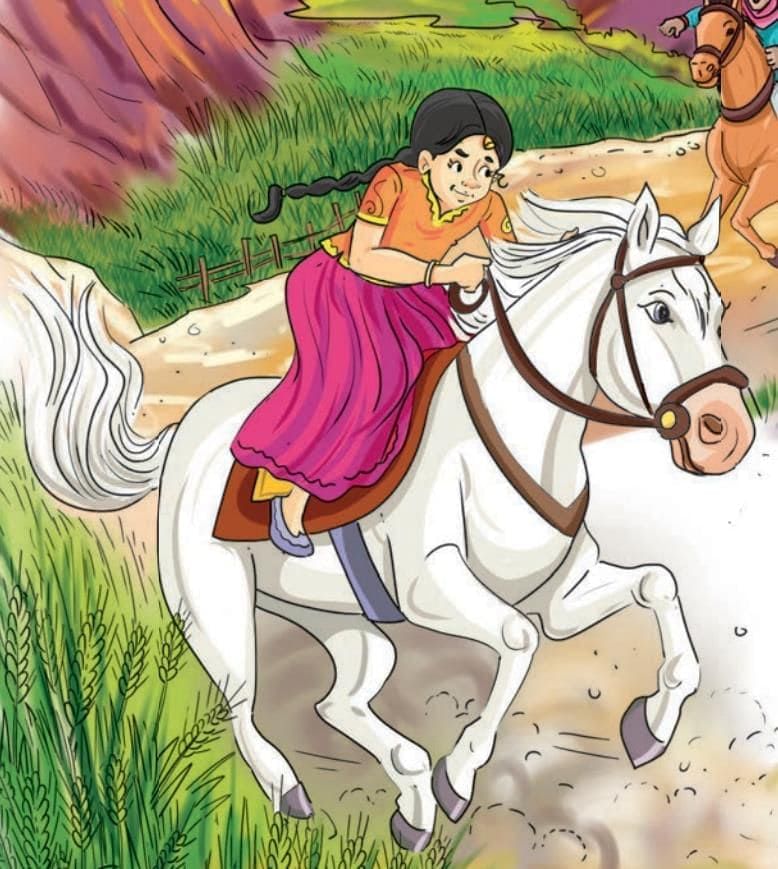
The road leads out of prison gates.
The horse, she swiftly urges
Gopi leaps on and gallops fast,
Through fields and many villages.
Answer
Explanation:The magic painting comes to life. The road opens the way out of the prison, and the horse lets Gopi escape. She rides through the countryside quickly, showing her courage and cleverness.
19
Stanza 18
“It’s Gopi! It’s Gopi! She’s back again!”
Say the villagers, merry and kind.
But Gopi keeps on painting still,
With the Zamindar’s men following behind.
Answer
Explanation:The villagers are happy to see Gopi again, but she doesn’t stop—she keeps painting, as the Zamindar’s men are chasing her. The tension rises again as the story is not over yet.
20
Stanza 19
She paints a mighty river wide,
Its currents fast and deep.
The Zamindar and all his men
Stop short and cannot leap.
Answer
Explanation:To block her pursuers, Gopi paints a wide, fast-flowing river. It becomes real, and the Zamindar’s men can’t cross it. This shows how she uses her wit to protect herself.
21
Stanza 20
“Now should I paint a beast
To leap and chase you through?
Stop this chase or it will feast
On you, and you and you!”
Answer
Explanation:Gopi warns the Zamindar’s men that she could paint a dangerous beast to attack them. Her warning is powerful and scary. She shows that she can defend herself without hurting anyone—unless she’s forced to.
22
Stanza 21
The Zamindar cries, “No, no, no more!
I’ll leave, I’ll go away!”
He turns and flees; his men behind
Dare not choose to stay.
Answer
Explanation:
The Zamindar becomes scared and runs away, shouting that he gives up. His men follow him because they are too afraid to stay behind. Gopi has won without using violence—just her cleverness and courage.
23
Answer
- The Power of Art: Gopi’s magical paintings show how creativity can transform the world.
- Helping Others: She uses her talent to aid the poor, highlighting generosity and community.
- Bravery and Resistance: Gopi stands up to the Zamindar, showing courage and commitment to her values.
- Wealth vs. Kindness: The story contrasts material wealth with true kindness.
24
Answer
- Use Talents Wisely: Skills should be used to bring joy and help others.
- Stand Up for What is Right: Stay true to your beliefs, even under pressure.
- Value Community: Happiness comes from helping and supporting each other.
- Giving Brings Joy: True fulfillment comes from sharing and caring.
25
Answer
- Zamindar: A landowner or landlord, often with power over the village.
- Muffler: A piece of clothing worn around the neck for warmth.
- Plough: A tool used in farming to turn over soil for planting.
- Emerald: A precious green gemstone.
- Fortress: A large fortified building or military stronghold.
- Currents: The flow of water in a river or stream.
- Feast: A large meal, usually celebrating a special occasion.
- Chase: To run after someone or something.
- Grand: Magnificent or impressive in appearance or style.
- Whispers: To speak very softly.
- Grins: To smile broadly.
- Hush: To make someone be quiet.
- Gains: Acquisitions or benefits, often referring to wealth.