Summary for A Concrete Example Class 8 English Poorvi
Book Solutions1
About the Poet
Answer
Reginald Arkell was a British poet and writer known for his light verse, humour, and garden-themed works. He often wrote about rural life and everyday observations with wit and irony. His most famous work is the novel Old Herbaceous, which reflects his love for gardening. In the poem “A Concrete Example”, he uses gentle humour to highlight the contrast between stones and tiny plants, showing his typical style of blending nature with humour.
Reginald Arkell
2
Key Points of the Poem
Answer
- The speaker describes his neighbour, Mrs. Jones, who has a garden mainly filled with stones.
- Her garden includes a crazy path, lily pond, rockery, and a sundial.
- She grows tiny plants between the stones, which are so small and delicate that they seem almost insignificant.
- The speaker jokes that she must plant them with a pin because of their minuteness.
- Mrs. Jones once invited the speaker to view her garden.
- They spoke about a flower for a long time, but the speaker could not spot it.
- In the end, Mrs. Jones reveals the flower was so tiny that the speaker was actually standing on it.
3
Stanza 1
My next-door neighbour, Mrs. Jones,
has got a garden full of stones:
A crazy path, a lily pond,
a rockery and, just beyond
A sundial with a strange device,
which Mrs. Jones thinks rather nice.
Answer
Explanation: In this stanza, the poet introduces us to Mrs. Jones, who lives next door. She has a very unique garden. Instead of flowers and grass, her garden is filled with stones. This makes her garden look different and special. The poet describes her garden as having a "crazy path," which means the path is not straight and might twist and turn. There is also a "lily pond," where we can imagine pretty water flowers called lilies. A "rockery" is a special place in the garden where stones are placed beautifully, and it looks nice. Beyond that, Mrs. Jones has something called a "sundial," which is a tool that tells the time using the sun. The poet mentions that the sundial has a "strange device," which means it looks unusual or different. Mrs. Jones thinks her garden is lovely, and she takes pride in it. This stanza helps us see how gardens can be different and that people can like different things.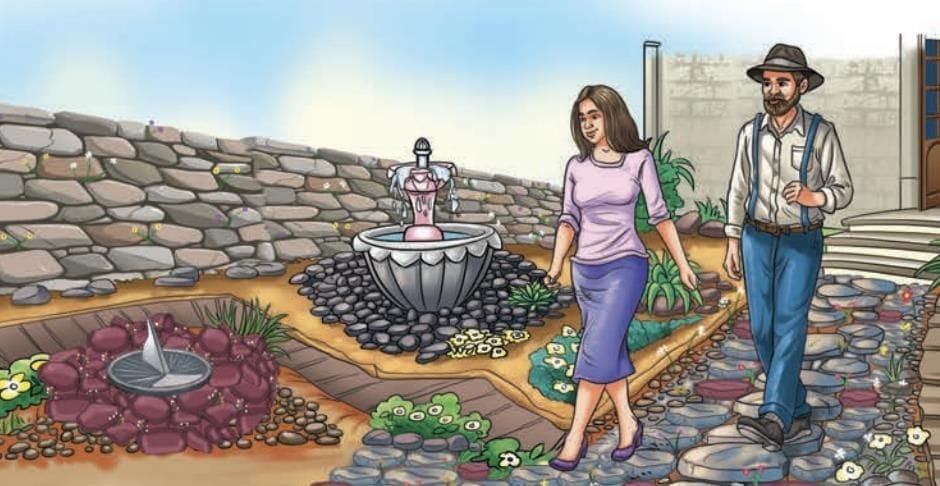
Detailed Summary
4
Stanza 2
My next-door neighbour, Mrs. Jones,
puts little plants between the stones.
They are so delicate and small,
they don't mean anything at all.
I can't think how she gets them in,
unless she plants them with a pin.
Answer
Explanation: In this stanza, the poet tells us more about Mrs. Jones's garden. He observes that she doesn’t just have stones; she also has tiny plants growing between the stones. These plants are described as "delicate and small," which means they are very tiny and gentle. The poet feels that these tiny plants are not very important or do not mean much, like they are too small to matter. He wonders how Mrs. Jones manages to plant them in such tight spaces between the stones. This thought is so funny and surprising to him that he imagines she must use a little pin, like a tiny needle, to help her plant them. This shows how special Mrs. Jones's garden is, and it makes us think about how people can do amazing things to care for their gardens, even if it seems difficult.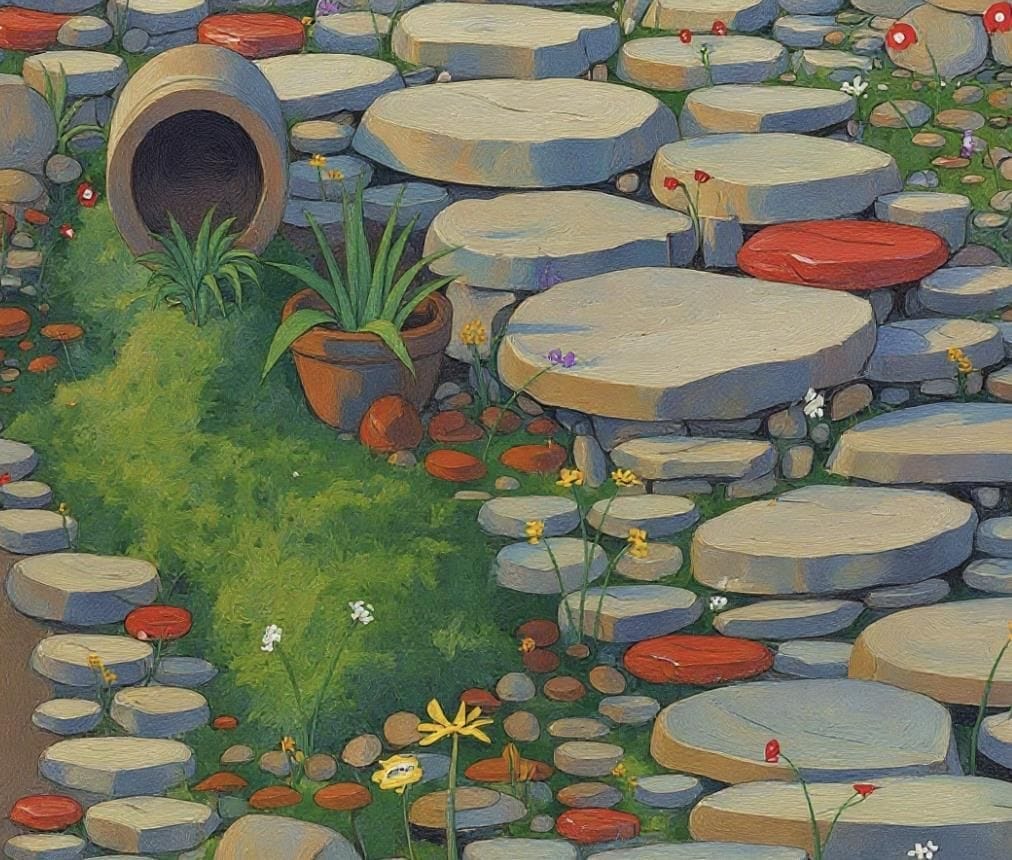
Detailed Summary
5
Stanza 3
My next-door neighbour, Mrs. Jones,
once asked me round to see her stones.
We stood and talked about a flower
for quite a quarter of an hour.
'Where is this lovely thing?' I cried.
'You're standing on it,' she replied.
Answer
Explanation: In this stanza, the poet shares a memory of when Mrs. Jones invited him to see her garden. He was excited to visit and talk about the plants. They spent a long time, which is "a quarter of an hour," or fifteen minutes, talking about a flower. The poet is curious and asks her where this beautiful flower is because he cannot see it. Mrs. Jones gives a surprising answer; she says he is standing on it! This means that the flower is very small and hard to see, maybe one of those tiny plants mentioned earlier. This shows how sometimes we might overlook things that are right in front of us. It also highlights the special bond between the poet and Mrs. Jones, as they enjoy talking about her garden, even if it is a bit different from what most people expect.
Detailed Summary
6
Theme
Answer
- The joy of gardening: The poem celebrates the simple pleasures found in gardening, showing how it can bring joy and beauty to everyday life.
- Perception vs. reality: There is a humorous contrast between how the speaker sees Mrs. Jones’ garden and how she perceives it. This theme suggests that beauty can be subjective.
- Connection with nature: The poem emphasizes the importance of connecting with nature and finding happiness in small, everyday moments.
7
Message
Answer
- Beauty is everywhere: The poem conveys the message that beauty can be found in unexpected places, even in a garden full of stones.
- Encouragement to appreciate the little things: Arkell encourages readers to take a moment to appreciate the small details in life, as they can hold great significance.
- Humor in daily life: The lighthearted tone of the poem reminds us to find humor in our daily experiences, especially in our interactions with others
8
Difficult Words
Answer
- Neighbour – a person living next door.
- Rockery – a garden area where rocks are arranged with small plants growing among them.
- Sundial – a device that shows the time of day by the shadow of a pointer cast by the sun.
- Device – an object, invention, or mechanism designed for a purpose.
- Delicate – very fine, light, or fragile; easily broken.
- Insignificant – too small or unimportant to be noticed.
- Quarter of an hour – 15 minutes.
- Concrete – something real, solid, or actual (also a play on words, as the garden is full of stones).
- Path – A walkway or trail through a garden.
- Lily pond – A pond with water lilie