NCERT Solutions for Chapter 7 The Case of the Fifth Word Class 8 English
Book Solutions1
I: Work in pairs. Solve the crossword puzzle given below with the clues in the form of anagrams.
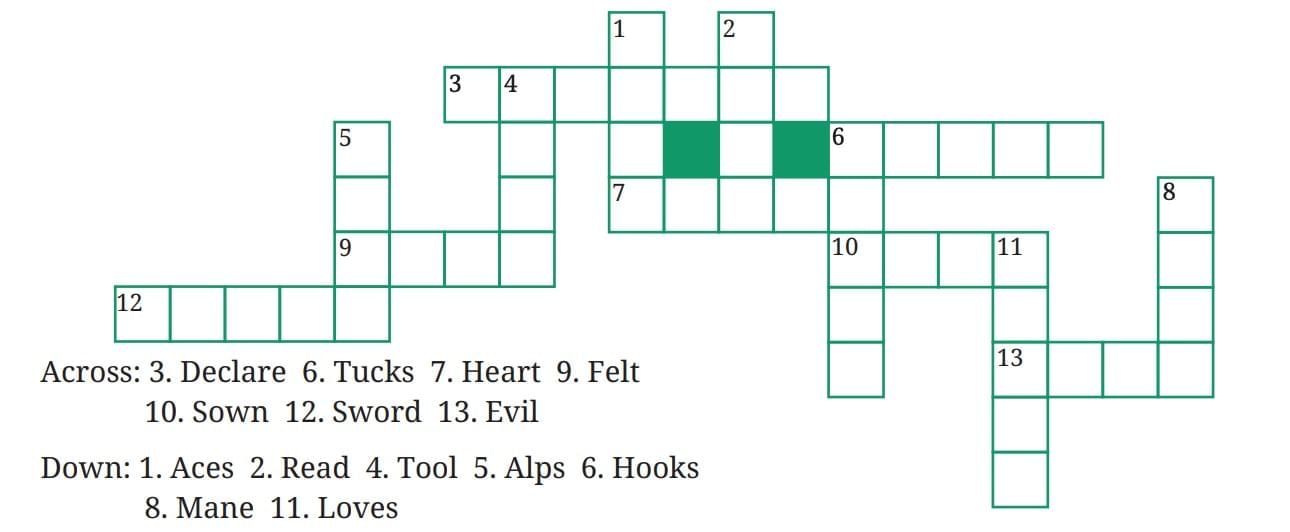
Answer
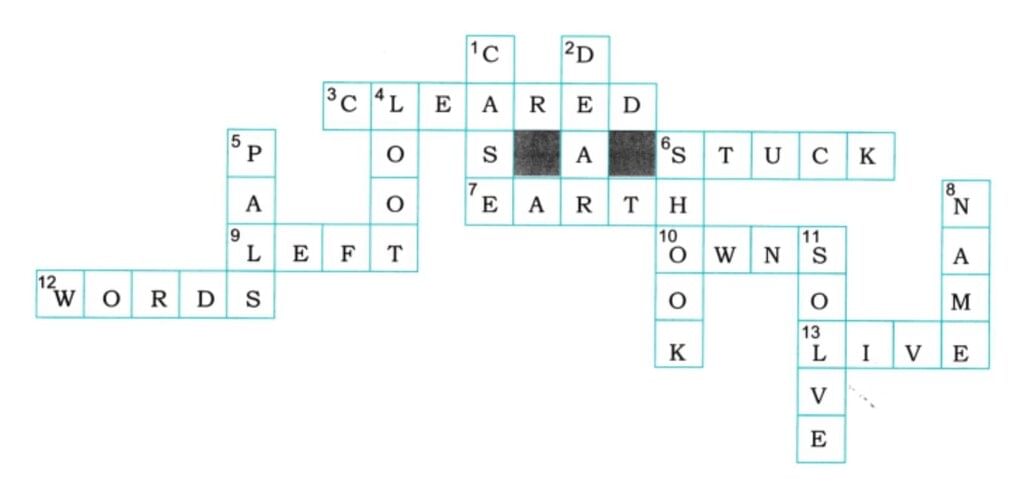
2
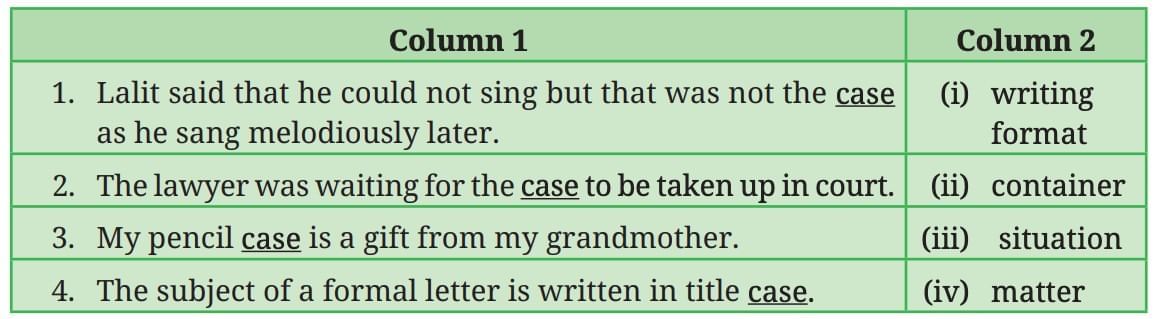
Answer
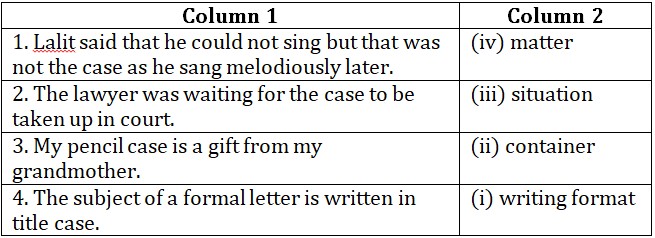
3
1. Leroy’s nickname was Encyclopedia, and everyone called him by that name because ____________
2. At the dinner table on Tuesday night, Chief Brown stared at his cream-of-mushroom soup as ____________
3. Encyclopedia sat quietly at the dinner table because ____________
4. Nolan put the will on the kitchen table because ____________
Answer
1. he read many books and never forgot a fact, knowing more than anyone in Idaville.2. he was deep in thought, puzzled by the strange four-word message and trying to solve the mystery.
3. he knew his parents were discussing the case for him to hear and solve.
4. he wanted to leave a clue about the hidden jewellery’s location for Davenport.
4
Answer
Yes, Chief Brown needed Leroy’s help because the four-word code (Nom, Utes, Sweden, Hurts) was confusing, and Leroy’s clever question about the fir tree solved the case quickly.5
1. Encyclopedia’s father was the Chief of Police.
2. Everyone thought that Chief Brown must be the smartest police chief in the country.
3. An encyclopedia is a book or set of books filled with facts from A to Z.
4. Leroy’s friends said that he was like a library and a computer rolled into one, and more user-friendly.
5. Two masked men held up the Diamond Mart on Sixth Avenue.
6. Nolan and Davenport had met while both were in prison in South Carolina.
7. Chief Brown’s hunch was that Davenport and Nolan decided to hide the loot until things cooled down.
8. Nolan wrote a four-word code to tell Davenport where he had hidden the stolen jewellery.
Answer
1. Fact2. Opinion
based on people’s beliefs
3. Fact
definition of an encyclopedia
4. Opinion
friends’ subjective view
5. Fact
verifiable event
6. Fact
verifiable past event
7. Opinion
based on Chief Brown’s belief
8. Fact
verifiable action in the story
6
Answer
7
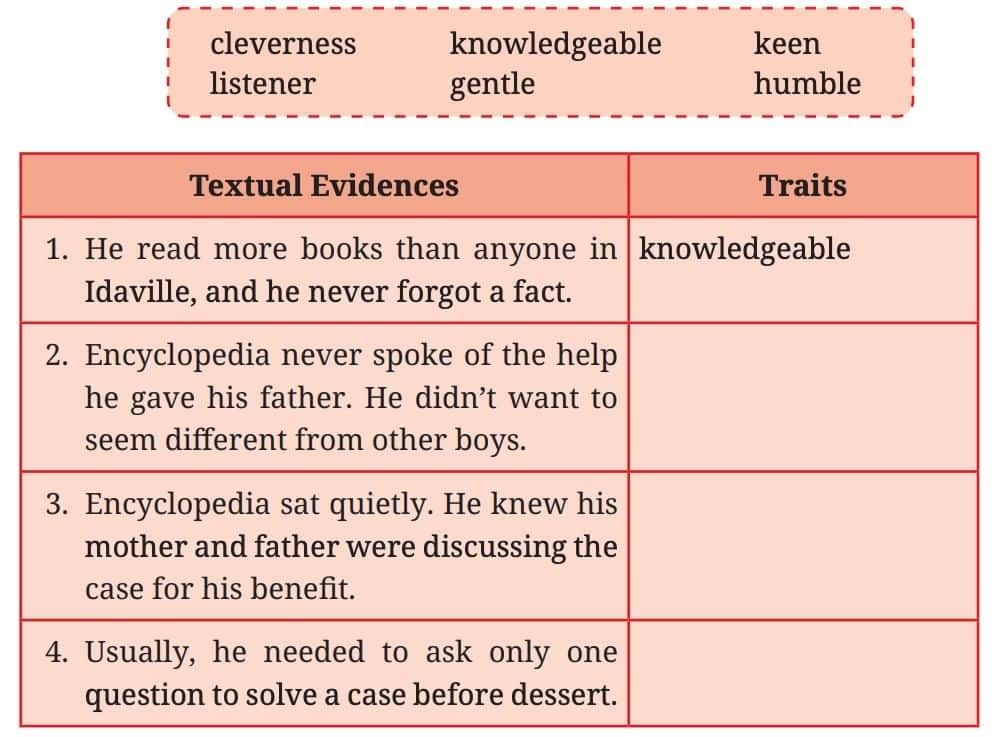
I: Read the given extracts and answer the questions that follow.
1. Chief Brown would have liked to tell everyone about his only child. But who would believe him? Who would believe that the best detective alive was an eighth grader? So, he said nothing.
Encyclopedia never spoke of the help he gave his father. He didn’t want to seem different from other boys. But there was nothing he could do about his nickname. He was stuck with it.
Only his parents and teachers called him by his real name, Leroy. Everyone else called him Encyclopedia.
(i) Complete the following sentence with a suitable reason.
Chief Brown’s dilemma can be called unique because____________.
(ii) What can be inferred about why Encyclopedia never spoke of the help he gave his father?
A. He is shy and lacks confidence in his abilities to share his insights.
B. He wants to avoid the jealousy others might feel about his skills.
C. He desires to blend with the other boys to prevent seeming different.
D. He is embarrassed about being smarter than most adults around him.
(iii) The parents choose not to call their son ‘Encyclopedia’. Select the reason that is false.
A. For them, he is more than his unique abilities; he is their child, with a personal identity.
B. Calling him by his real name reflects their affection and the desire to acknowledge him as an ordinary boy.
C. They want him to be remembered as different from the others around.
(iv) What does the writer mean by the fact that Leroy was ‘stuck with’ the name Encyclopedia?
Answer
(i) Chief Brown’s dilemma can be called unique because he wanted to tell everyone his son was a brilliant detective, but no one would believe an eighth grader could be so talented.(ii) C. He desires to blend with the other boys to prevent seeming different.
(iii) C. They want him to be remembered as different from the others around.
(iv) It means that although Leroy did not choose or particularly like the nickname, people around him used it so frequently that he had no choice but to accept it. Everyone called him “Encyclopedia” because of his vast knowledge, and he couldn’t change this nickname.
8
“Nom is a shortening of nominative, a grammatical term,” stated Mrs. Brown, who had taught English and other subjects in high school.“Utes is an American Indian tribe. Sweden is a country in northern Europe. Hurts is hurts.”
She lifted her gaze to Encyclopedia and shook her head.
“I can’t figure it out,” she confessed. “Davenport disappeared right after the hold-up,” Encyclopedia reminded her.
(i) What does Chief Brown’s reaction of shaking his head suggest about his understanding of the four words?
A. He is confident that the words are a clue.
B. He is confused, unable to make sense of the words.
C. He believes the words are random and meaningless.
D. He thinks the words are unrelated to the case.
(ii) Identify whether the given statement is true or false. Mrs. Brown explained the actual meanings of the individual words rather than decoding the hidden message behind them.
(iii) What does Mrs. Brown’s inability to decode the words suggest about the message?
(iv) Complete the following sentence suitably.
The purpose of Encyclopedia’s reminder in the last line of the extract was to _________________. (refocus the discussion on the context of the crime/suggest that the coded message was meant for Davenport/imply that the message was likely a clue about the location of the stolen jewellery)
Answer
(i) B. He is confused, unable to make sense of the words.(ii) True
(iii) It suggests that the message is cleverly hidden, not meant to be taken literally, and requires deeper understanding or special insight to interpret.
(iv) The purpose of Encyclopedia’s reminder in the last line of the extract was to imply that the message was likely a clue about the location of the stolen jewellery.
9
1. Nolan and Davenport were very close. Support this statement with evidence from the text.
2. Why did Davenport disappear right after the jewellery hold-up? What might his plans have been if Nolan had not died?
3. What does Mrs. Brown’s interest in the case tell us about her?
4. Explain why Chief Brown was proud of his son.
5. Why were Chief Brown’s suspicions regarding Nolan and Davenport justified, even when there was a lack of concrete proof?
6. Analyse the role of the four-word coded message in the story.
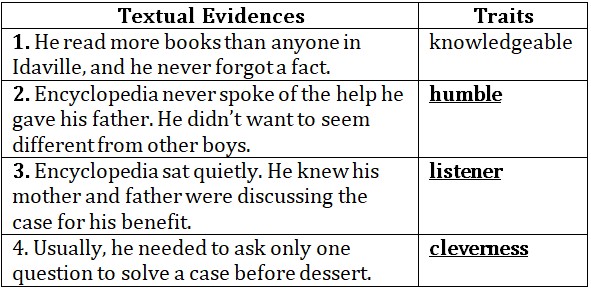
7. Write a character sketch on Leroy with the help of the character trait stable given in ‘Let us discuss’ section. You may begin it like this:" Encyclopedia was a knowledgeable eighth grader who never forgot a fact that he read. "
Answer
1. Nolan and Davenport were described as having met while in prison and becoming close during that time. After their release, they worked together on a jewellery heist. Nolan trusted Davenport enough to leave him a secret four-word coded message about the location of the hidden loot, showing a high level of trust and closeness.2. Davenport disappeared to avoid being caught and to lay low while the police were actively investigating the robbery. If Nolan had not died, Davenport likely planned to meet him later, use the coded message to retrieve the stolen jewelry, and then split the loot once the search had died down.
3. Mrs. Brown’s interest shows that she is . intelligent, curious, and enjoys intellectual challenges. Her background as a teacher of English and other subjects indicates she is analytical and observant. Although she couldn’t solve the puzzle, her willingness to engage in the case shows she values logic and deductive thinking, and supports her family’s interest in solving crimes.
4. Chief Brown was proud of Encyclopedia because of his extraordinary intelligence, keen observation, and logical reasoning skills. Despite being just an eighth grader, Encyclopedia was often able to crack tough cases that stumped experienced adults. His humility and quiet support in helping his father also earned his father’s deep respect and admiration.
5. Chief Brown’s suspicions were based on solid circumstantial evidence. Nolan and Davenport’s criminal history, their sudden disappearance after the robbery, and the cryptic note found in Nolan’s notebook all pointed toward their involvement. Even without direct proof, these clues made his hunch reasonable and logical.
6. The four-word coded message—“Nomutes Sweden Hurts”—played a key role in the mystery. At first, it seemed meaningless, but Encyclopedia applied his logical thinking to decode it. Each word pointed to the fifth word in the dictionary on the corresponding page, which revealed the hidden clue “Under steps,” showing where the stolen jewelry was kept. Another layer of meaning connected the code words (Nom, Utes, Sweden, Hurts) to the days of the week (Monday to Thursday), with the missing fifth day, Friday, leading to the final clue: the jewelry was hidden in a fir tree’s jug.
Thus, the coded message added complexity to the mystery, tested the reader’s thinking, and highlighted Encyclopedia’s sharp deductive skills.
7. Encyclopedia was a knowledgeable eighth grader with an excellent memory and sharp observation skills. His logical mind and calm reasoning made him a brilliant young detective who could often solve cases with just one question. Despite his extraordinary intelligence, he was humble and never boasted about helping his father in police cases. Known by the nickname “Encyclopedia” because of his vast knowledge, he preferred to stay grounded, blend in with other boys, and listen quietly. His humility, cleverness, and dependability made him both admirable and likeable.
10
Answer
11
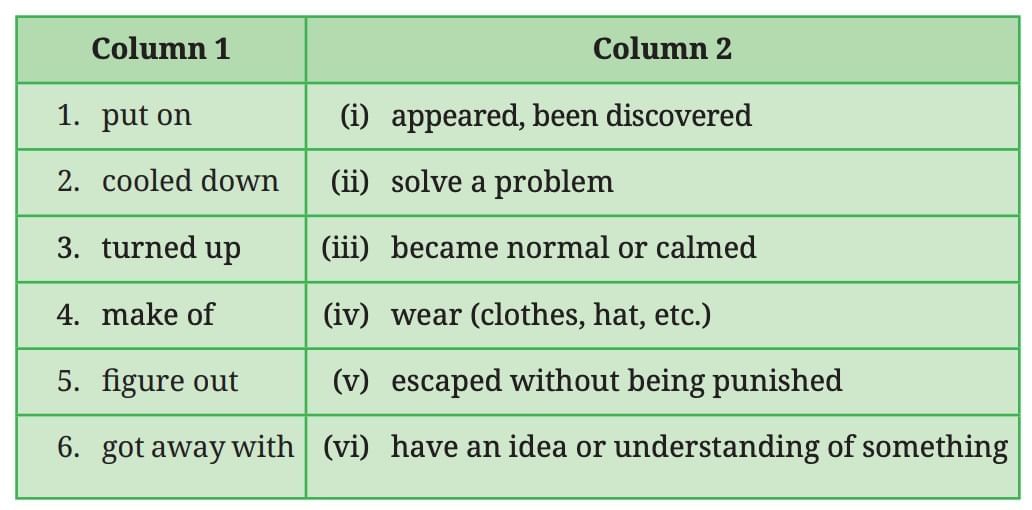
A. Finally, some important evidence about the case has _______________.
B. After I _______________, I understood that I had made a big mistake.
C. I couldn’t _______________ why he was angry with me.
D. He _______________ his special coat and went to his friend’s birthday party.
E. Ravi forgets to do his homework but he _______________ it as teacher didn’t ask for it that day.
F. I do not know what to _______________ his behaviour.
Answer
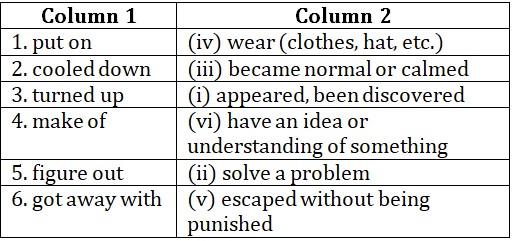
A. Finally, some important evidence about the case has turned up.B. After I cooled down, I understood that I had made a big mistake.
C. I couldn’t figure out why he was angry with me.
D. He put on his special coat and went to his friend’s birthday party.
E. Ravi forgets to do his homework but he got away with it as teacher didn’t ask for it that day.
F. I do not know what to make of his behaviour.
12

1. After running for 50 kilometres last _________________, I felt _________________ for two days.
2. When the committee met yesterday, they brought _________________ local cases to the _________________.
3. While learning to drive, Rina used too much force on the _________________, causing the car to _________________ down.
4. He has composed a beautiful _________________ of music in order to bring _________________ to thousands of people.
5. She was busy _________________ her hair not caring about the _________________ flowers in her garden.
Answer
1. After running for 50 kilometres last week, I felt weak for two days.2. When the committee met yesterday, they brought four local cases to the fore.
3. While learning to drive, Rina used too much force on the brake, causing the car to break down.
4. He has composed a beautiful piece of music in order to bring peace to thousands of people.
5. She was busy dyeing her hair not caring about the dying flowers in her garden.
13
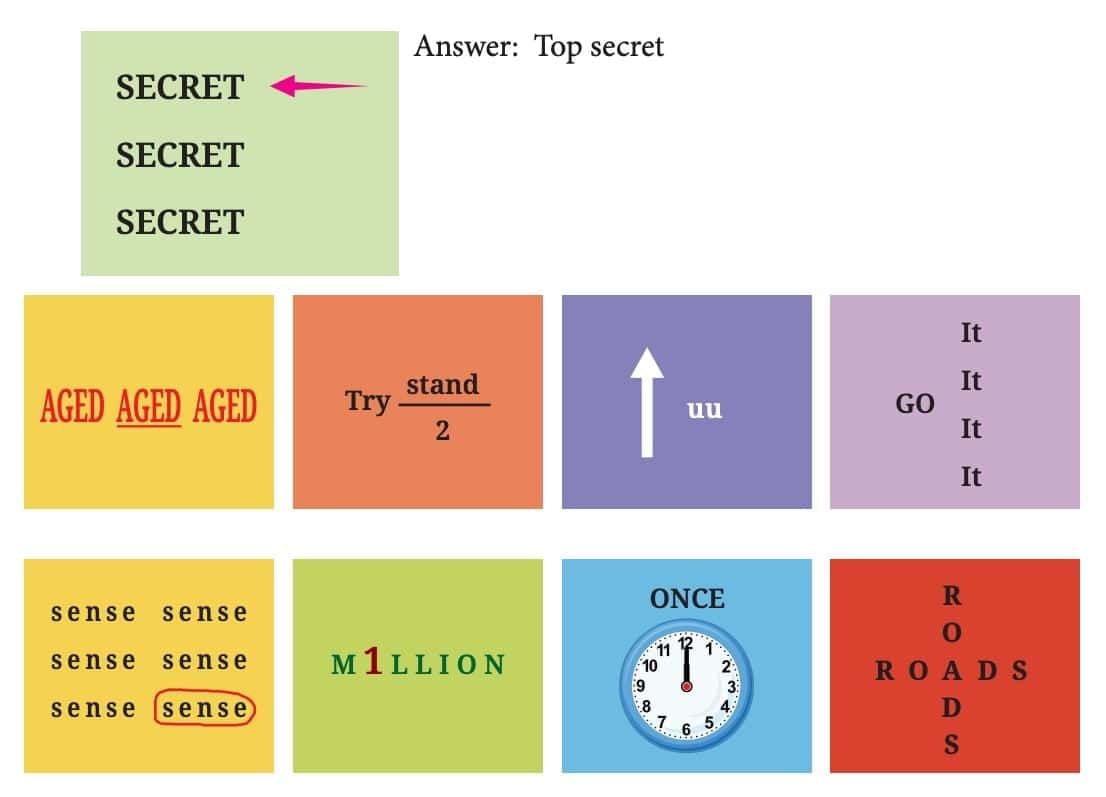
Answer
Middle-aged, Try to understand, Up to you, Go for it, Sixth sense, One in a million, Once upon a time, Crossroads14
IV: Spoonerism is a mistake made when speaking, where the first sounds of the words in a phrase or a sentence are exchanged with each other. This usually gives a funny meaning. Some examples of spoonerism are saying ‘wrong load’ instead of ‘long road’, 'round of mice’ instead of ‘mound of rice’.
Find the correct order for the following spoonerisms.
1. knowing sits
2. it’s roaring with pain.
3. plaster man
4. blarm wanket
5. tars and crucks
6. shake a tower
7. bead a rook
8. mardon me padam
Answer
1. knowing sits → sowing knits (or more sensibly: sewing knits)2. it’s roaring with pain → it’s pouring with rain
3. plaster man → master plan
4. blarm wanket → warm blanket
5. tars and crucks → cars and trucks
6. shake a tower → take a shower
7. bead a rook → read a book
8. mardon me padam → pardon me madam
15
V: Read the following sentences from the text and study the highlighted words.
1. Everyone thought that he must be the smartest police chief in the country.
2. She read what he had copied.
3. They tell where the jewellery is hidden.
4. “Nom is a shortening of nominative, a grammatical term,” stated Mrs.Brown, who had taught English and other subjects in high school.
5. “Nolan and Davenport had met,” Chief Brown said, “while both were in prison in South Carolina.”
6. When he came up against a case he couldn’t solve, he acted at once.
7. The code is simple, especially as it’s written on a sheet from a calendar.
8. They became friendly because of shared interests.
9. Encyclopedia solved the case for him before dinner was over.
Now, fill in the blanks with the words in the box given below to complete the following sentences. There are two extra words that you do not need.

Detective stories are exciting, keeping readers guessing (i) ____________ the real culprit is. They take place in settings (ii) ____________ clues are hidden carefully. (iii) ____________ the mystery seems tricky, a clever detective always finds answers. Readers often wonder (iv) ____________ criminals leave small but important clues. The challenge is to decide (v) ____________ suspect is guilty. (vi) ____________ the truth is revealed, everything makes sense. But one may wonder (vii) ____________ they could have solved it themselves. These stories are fun (viii) ____________ they make readers think till the very end.
Answer
Detective stories are exciting, keeping readers guessing (i) who the real culprit is. They take place in settings (ii) where clues are hidden carefully. (iii) Though the mystery seems tricky, a clever detective always finds answers. Readers often wonder (iv) why criminals leave small but important clues. The challenge is to decide (v) which suspect is guilty. (vi) When the truth is revealed, everything makes sense. But one may wonder (vii) if they could have solved it themselves. These stories are fun (viii) because they make readers think till the very end.16
1. We gave him the signal. He was waiting for the signal. (that)
2. We went to a place. The incident occurred there. (where)
3. Teacher said she would retire soon. She is now nearly sixty. (who)
4. It was the day. Half the class was absent. (when)
Answer
1. We gave him the signal that he was waiting for.2. We went to the place where the incident occurred.
3. The teacher, who is now nearly sixty, said she would retire soon.
4. It was the day when half the class was absent.
17
VII: Read the following sentences from the text
1. “What’s suspicious about that?” Mrs. Brown asked.
2. “What do you make of the four words, Leroy?”
3. “Wasn’t he mixed up in a jewellery robbery a few years ago?”
4. “Didn’t you search Nolan’s house, dear?”
5. “Is there a young fir tree in Mr. Nolan’s palm-tree nursery?”
The given sentences are the direct words of the speaker, hence, they are in direct speech. While reporting these direct words to someone else at some other time and some other place, we make certain modifications in person, tense, and adverbs of place and time .
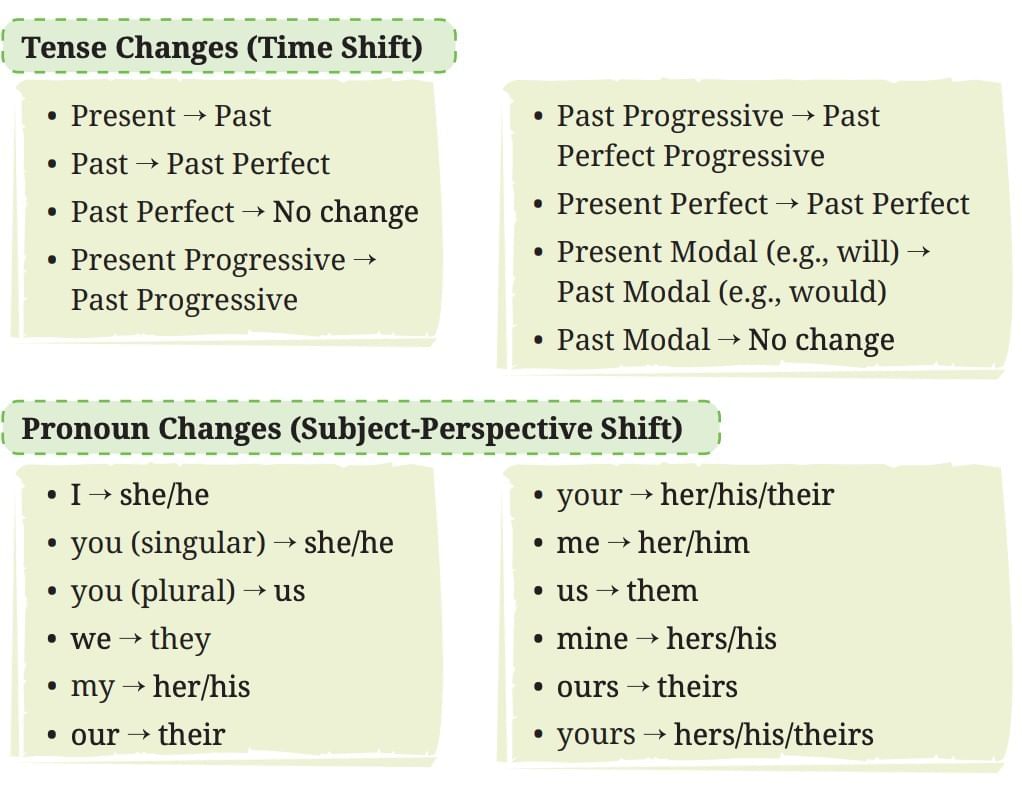
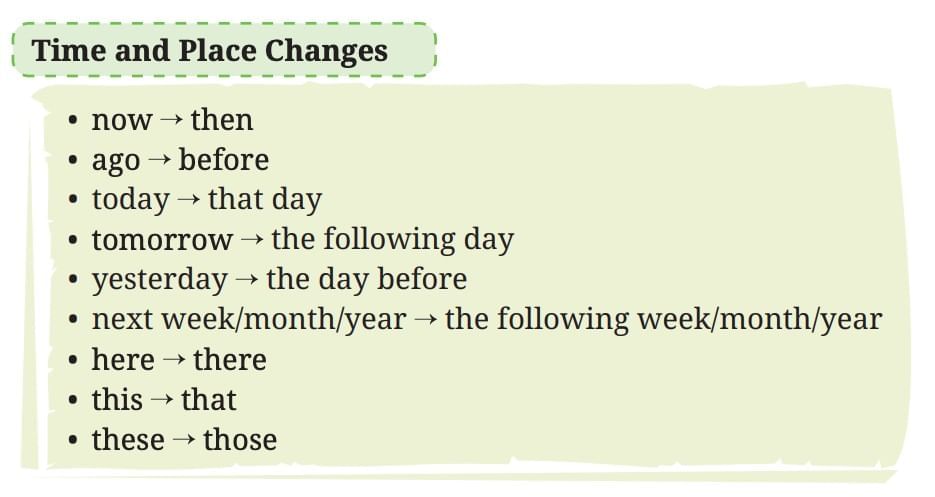
There are two types of Interrogative sentences. They are Wh– questions and Yes/No questions.
Steps for Reporting Wh– questions and Yes/No questions
1. Replace the reporting verb ‘said’ with words like ‘asked’, ‘inquired ’, ’ interrogated’, or ‘questioned’.
2. Convert the interrogative sentence into a declarative one.
3. Apply the appropriate tense shift as per the rules of tense changes.
4. Remove quotation marks and the question mark.
5. Omit the conjunction ‘that’ in the reported speech.
6. In Wh– Wh-questions, place the Wh–word immediately after the reporting verb in the reported speech.
7. In Yes/No questions, use ‘if’ or ‘whether’ immediately after the reporting verb in the reported speech.
Now, follow these steps to transform the sentences given as examples from direct speech to indirect speech. Indirect Speech
(i) Mrs. Brown asked _________________________________________.
(ii)Mrs. Brown questioned Leroy __________________________________.
(iii) Mrs. Brown inquired __________________________________________.
(iv) Mrs. Brown asked Chief Brown ________________________________.
(v) Mrs. Brown inquired ___________________________________________.
Answer
(i) Mrs. Brown asked what was suspicious about that.(ii) Mrs. Brown questioned Leroy what he made of the four words.
(iii) Mrs. Brown inquired whether Tim Nolan had been mixed up in a jewellery robbery a few years before.
(iv) Mrs. Brown asked Chief Brown whether he had searched Nolan’s house.
(v) Mrs. Brown inquired whether there was a young fir tree in Mr. Nolan’s palm-tree nursery.
18
1. “Why did you stop talking to me?” asked Rohan.
Rohan questioned __________________________________________________.
2. “Did you enjoy the family gathering yesterday?” asked my aunt.
My aunt asked ______________________________________________________.
3. “When will you visit us again?” asked my grandmother.
My grandmother inquired _________________________________________.
4. Madavi said to Ravi, “Will you come with me to meet our old teacher tomorrow?” asked Madavi.
Madavi asked Ravi __________________________________________________.
5. My friend said, “What gift are you planning to give your brother?”
My friend inquired _________________________________________________.
6. “Shall I carry these notebooks to the staffroom, Ma’am?” asked Veenu.
Veenu asked her teacher ____________________________________________.
Answer
1. Rohan questioned why I had stopped talking to him.2. My aunt asked whether I had enjoyed the family gathering the day before.
3. My grandmother inquired when I would visit them again.
4. Madavi asked Ravi whether he would come with her to meet their old teacher the following day.
5. My friend inquired what gift I was planning to give my brother.
6. Veenu asked her teacher whether she should carry those notebooks to the staffroom.
19
IX: Read the conversation between Aditi and Rahul
ADITI: Did you see anyone leave a package near the lift?
RAHUL: I noticed a man wearing a blue jacket drop it off.
ADITI: What time did you see this happen?
RAHUL: It was around 6:45 p.m.
ADITI: Were you able to see his face?
RAHUL: He wore a hood and so I couldn’t see his face.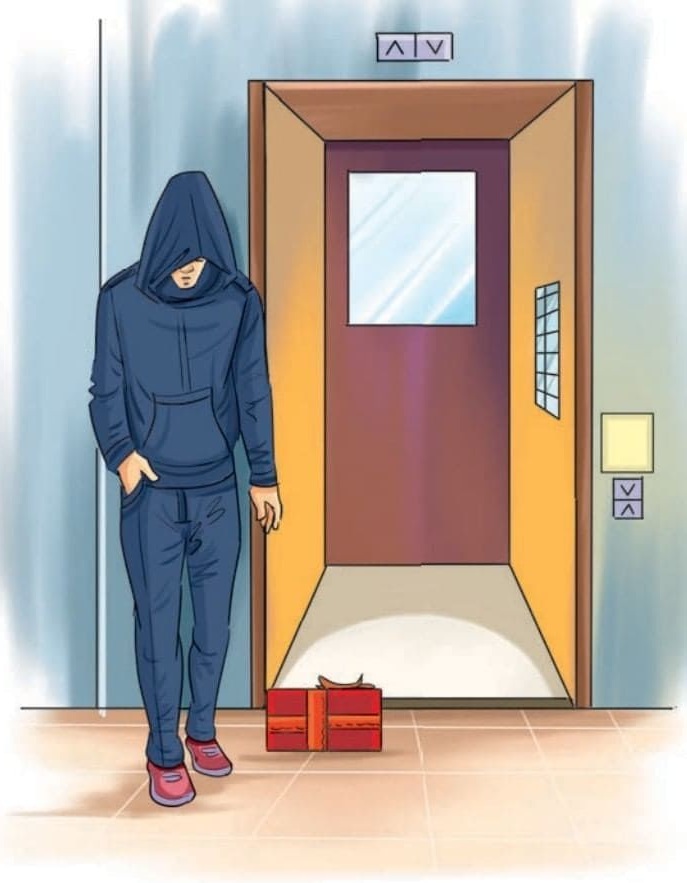
Complete the following paragraph by transforming the dialogue in indirect speech.
Aditi asked Rahul 1. ___________________________________________________.
Rahul replied that he had noticed a man wearing a blue jacket drop it off.
Aditi asked Rahul 2. ___________________________________________________.
Rahul replied that it had been around 6.45 p.m.
Aditi further inquired 3. _______________________________________________.
Rahul said that he had worn a hood, so he couldn’t see his face.
Answer
Aditi asked Rahul 1. ___________________________________________________.Ans: Aditi asked Rahul whether he had seen anyone leave a package near the lift.
Rahul replied that he had noticed a man wearing a blue jacket drop it off.
Rahul replied that he had noticed a man wearing a blue jacket drop it off.
Aditi asked Rahul 2. ___________________________________________________.
Ans: Aditi asked Rahul what time he had seen it happen.
Rahul replied that it had been around 6:45 p.m.
Rahul replied that it had been around 6.45 p.m.
Aditi further inquired 3. _______________________________________________.
Rahul said that he had worn a hood, so he couldn’t see his face.
Ans: Aditi further inquired whether he had been able to see his face.
Rahul said that he had worn a hood, so he couldn’t see his face.
20
1. Observation skills help improve your common sense.
2. Rushing through tasks helps you focus better and observe more.
3. Taking notes or making sketches helps with what you observe.
4. Incorporating tips on observation skills will soon lead to success.
Answer
1. True2. False - rushing reduces focus.
3. True
4. True
21
1. It is important to slow down and ___________________ to notice several aspects around you more clearly.
2. The more senses like hearing and smelling you use, the more___________________ you absorb.
3. People who are ___________________ tend to be better observers because they seek to understand what they notice.
4. When you make a note of things, it helps reinforce the ________________in your memory.
5. Practising mindfulness helps a person stay ___________________ with their surroundings.
Answer
1. It is important to slow down and take your time to notice several aspects around you more clearly.2. The more senses like hearing and smelling you use, the more details you absorb.
3. People who are curious tend to be better observers because they seek to understand what they notice.
4. When you make a note of things, it helps reinforce the information in your memory.
5. Practising mindfulness helps a person stay engaged with their surroundings.
22
Answer
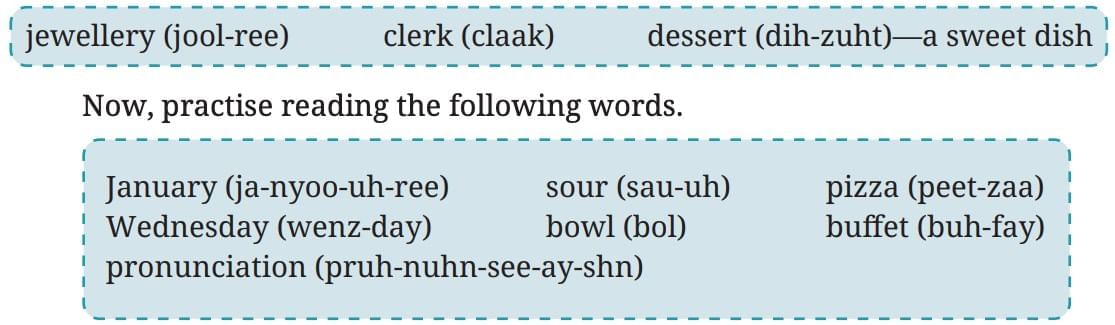
This is a classroom activity. Read with correct pronunciation:
January (ja-nyoo-uh-ree), sour (sau-uh), pizza (peet-zaa), Wednesday (wenz-day), bowl (bol), buffet (buh-fay), pronunciation (pruh-nuhn-see-ay-shn)
23
II: Work in groups of five or six. Conduct a group discussion on the topic,‘The Interesting Aspects of a Mystery Story’.
Guidelines
• The moderator initiates the discussion inviting the speakers to share their views on the subject.
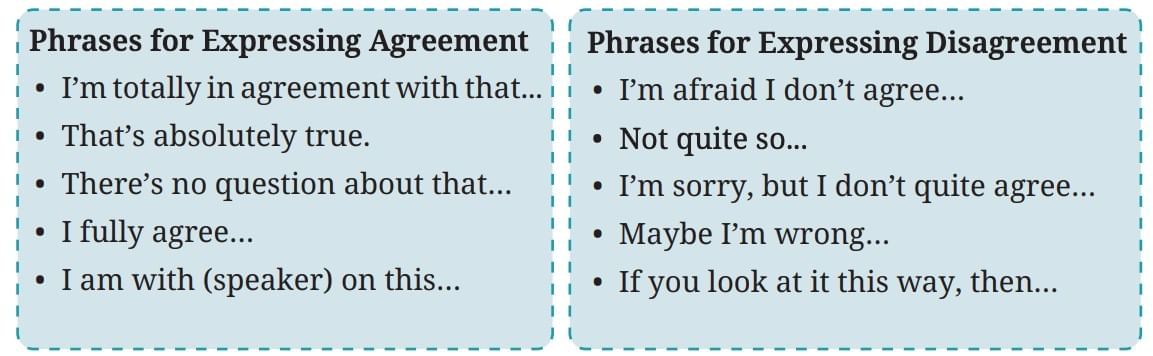
• The speakers take turns to put forth their viewpoint using polite expressions to agree or disagree.
• The speakers may interrupt by raising their hands to add or clarify a point.
• The moderator ensures equal participation of all the members in the group, consolidates views, and calls upon other speakers to respond.
• The moderator sums up the points of discussion, suggests guidelines for future action and thanks the members of the group.
Note: Choose a moderator. Decide upon the duration of the discussion.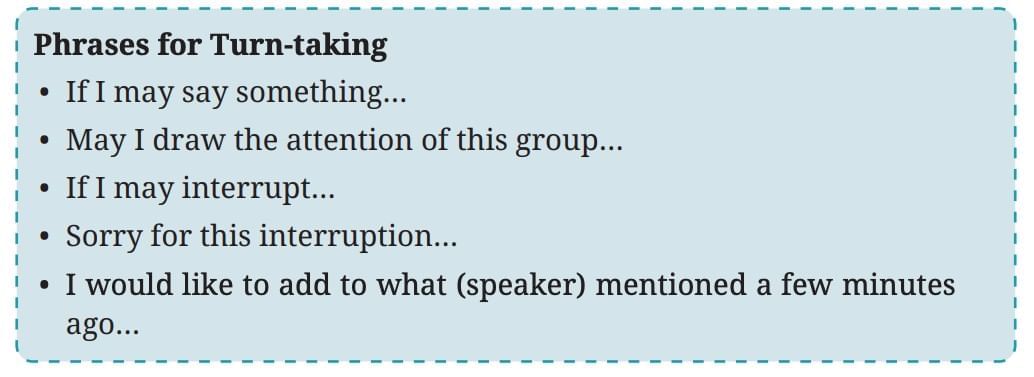
Answer
This is a classroom activity. Follow these guidelines:- The moderator starts by asking group members to share what makes mystery stories exciting.
- Speakers take turns, e.g., “I think mysteries are fun because they keep you guessing.”
- Use phrases like “If I may say something...” or “I agree with...” to agree/disagree politely.
- Example points: Mysteries have suspense, clever clues, and surprising endings.
- The moderator ensures everyone speaks and sums up, e.g., “We agree mysteries are exciting because of clues and twists.”
24
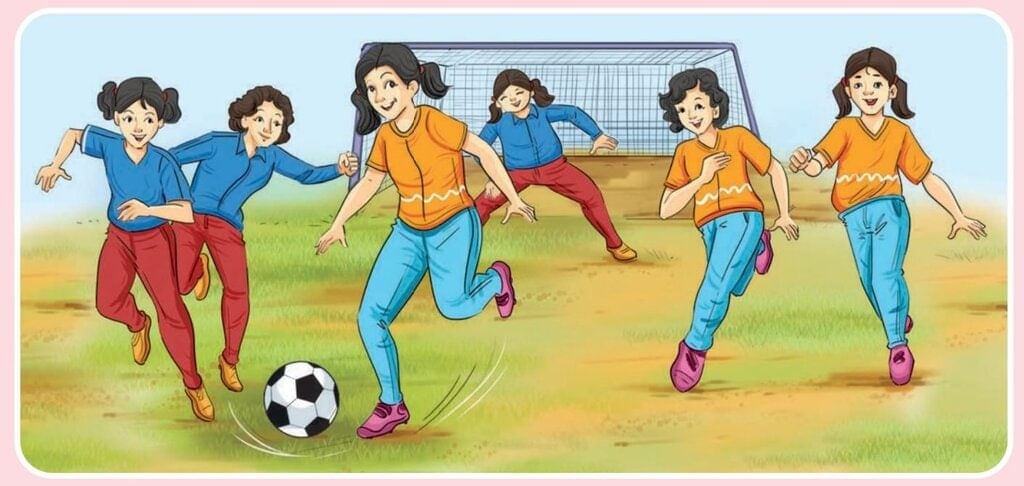
I: A report is written for an event that has already occurred. The purpose of a report is to provide first-hand details of an incident or event. It presents the information in a proper sequence. Read the sample report written about the ‘Inter-school Football Tournament’ organised by your Vidyalaya. Note the format, content, and language used.
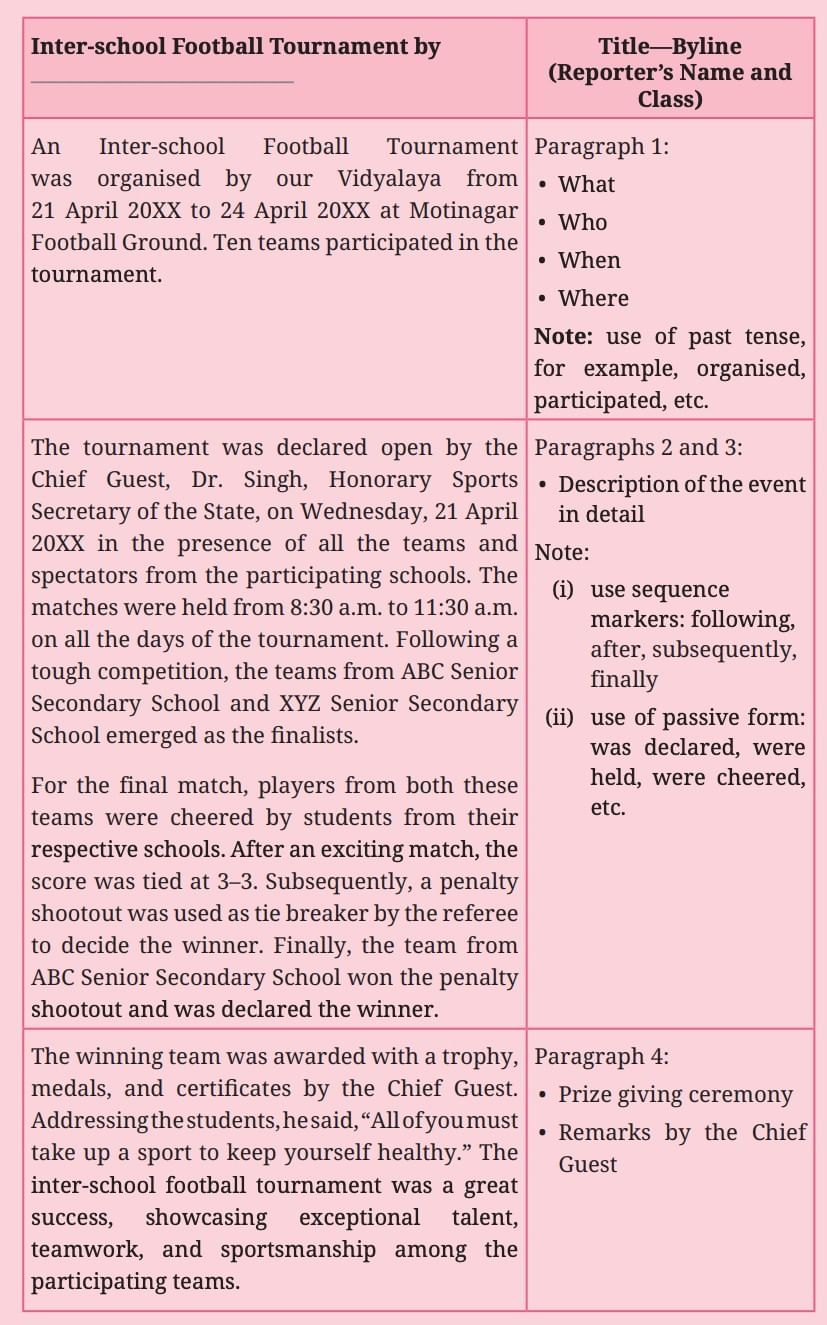
Now, as a member of the Art and Craft Club, write a report on an ‘Inter-school Art Exhibition’ organised by your school. Include the necessary details
Answer
Inter-school Art Exhibition Report[Your School Name], [City]
1 August 2025
Our school, Greenwood High, hosted a colourful Inter-school Art Exhibition on 15th October 2024 in the auditorium. The event, organised by the Art and Craft Club along with the Fine Arts Department, saw participation from 15 schools across the city.
The exhibition was inaugurated by the well-known artist Ms. Meera Kulkarni, who lit the ceremonial lamp and encouraged students to keep exploring their creativity. The theme was “Colours of Culture”, and the artworks beautifully showcased India’s traditions, festivals, and heritage.
Paintings, sketches, sculptures, and eco-friendly crafts were displayed. The use of recycled materials and natural dyes drew special appreciation. Our school’s artwork, “Nature’s Harmony”—a 3D wall mural made of clay and paper—was one of the highlights of the show.
A panel of judges evaluated the entries on creativity, originality, technique, and theme relevance. Springdale Public School won first prize, followed by Oakridge International and Greenwood High. The event ended with a short cultural performance and the prize distribution ceremony.
Overall, it was a grand success that celebrated art, culture, and teamwork. We look forward to many more such creative events!
Reported by: [Your Name], Art and Craft Club Member
25
I: Work in pairs. Read the words and observe the images given below. Check if your answers match. Share your answers with your classmates and teacher.
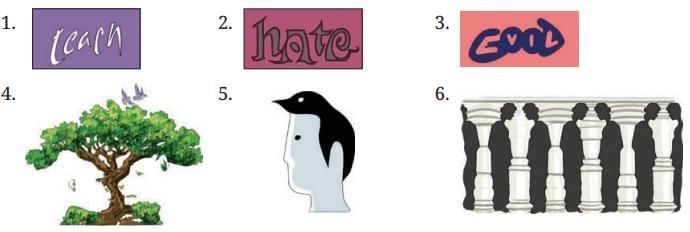
These are optical illusions which may trick the eye and make you think that you can see two different things.
Answer
Do it yourself.26
1. Divide the class into teams.
2. Each team chooses an object and prepares three hints to enable the other teams to name the object.
3. Each team takes turns to name the object given by the other team.
4. If a team names the object with the first hint, they get 20 points, with the second hint 10 points, and with the third hint 5 points.
One example with three hints:
(i) I display information for all to share, with a swipe I’m clean and bare.
(ii) I am rectangular or a square, whom neither teacher nor student can spare.
(in) I am mostly black, sometimes green, now in white too I am seen.
Answer
Do it yourself.27
Answer
An encyclopedia is a reference book (or a set of books) that provides detailed information on a wide range of subjects. The articles are usually arranged alphabetically and contain facts, explanations, and background knowledge written by experts. Encyclopedias can be general (like Encyclopedia Britannica) or subject-specific (like an Encyclopedia of Animals or Science).28
Answer
1. HappySynonyms: joyful, cheerful, delighted, content, elated
2. Fast
Synonyms: quick, speedy, rapid, swift, brisk
3. Beautiful
Synonyms: attractive, lovely, stunning, charming, elegant
4. Smart
Synonyms: intelligent, clever, bright, sharp, brainy
5. Angry
Synonyms: mad, furious, annoyed, upset, irritated